If you keep most of your crypto on an exchange or in a simple mobile wallet, you are taking a bigger risk than you might think. In 2024 alone, hackers stole around 2.2 billion dollars in crypto, and by mid-2025, that number was already above the previous year, driven by huge exchange breaches and wallet takeovers. So choosing the best external crypto wallet in 2025 is not only a tech choice, it is a serious risk decision.
Our products:
– Card Wallet as a Service (C-WAAS)
What is an external crypto wallet?
An external crypto wallet is a wallet where your private keys live outside your phone or computer, often on a hardware device like a card or dedicated signer. Instead of trusting an exchange or a browser extension, you hold your own keys and use the device to approve each transaction.
This approach is often called self-custody and it is gaining ground fast. Recent data suggests that almost 59 percent of wallet users now choose non-custodial setups rather than leaving everything with a third party, and hardware wallet sales are growing by more than 30 percent year over year.
Why external wallets matter in 2025
Crypto crime has not gone away; it has become more focused on big, high-value targets. Reports show that around 2.2 billion dollars was stolen in 2024, and by July 2025, stolen funds were already near 2.17 billion dollars, driven by a few very large platform hacks.
A large part of those losses come from stolen private keys, weak security on centralized services, and phishing that tricks users into signing bad transactions. Moving your assets into an external wallet that you control cuts exposure to these single points of failure.
Hot wallet vs external hardware wallet
Hot wallets are connected to the internet most of the time, which makes them handy but easier to attack. Cold or external hardware wallets keep keys offline and only sign from a secure element or protected chip.
How to choose the best external crypto wallet for your use case
To pick the right wallet, match the device features with how you actually use crypto:
For long-term holders
If you mainly buy and hold:
- Look for a smartcard or hardware device with a high security certification such as EAL6+.
- Make sure the backup and recovery process is clear, including seed phrase handling and test restores.
- Choose a solution that is easy to store discreetly at home or in a safe deposit box.
Card-based wallets with a simple mobile app fit this profile well, because they offer “set it and forget it” security while still letting you check balances or move funds when needed.
For active traders and DeFi users
If you move funds often, but still want strong security:
- Use an external wallet that connects smoothly to your main trading or DeFi interfaces through a companion app.
- Keep a smaller hot balance for high-frequency trades, while your main stack stays on the external wallet.
- Look for products that support multiple networks and assets, so you do not need several different devices.
A smart way to work is to pair a card-based hardware wallet with a well-designed mobile app, which lets you approve transactions with taps and PINs instead of typing long codes.
For businesses, exchanges, and fintechs
If you run an exchange, a fintech app, or a bank with digital assets, external wallets can become part of your product itself.
- Use Card Wallet as a Service models to ship initialized hardware wallets to your customers as part of your onboarding flow.
- Combine hardware wallet cards with FIDO2 smartcards so staff logins and customer accounts both benefit from phishing-resistant security.
- Integrate with mobile and back office tools so that treasury management, customer withdrawals, and compliance checks all work with hardware-level signing.
How card-based external wallets work in practice
Here is a simple view of what it feels like to use a smartcard-style external wallet:
- Order or receive your hardware wallet card from a trusted provider.
- Download the matching mobile app from the official site or app store.
- Initialize the card through the app, which generates keys inside the secure element and guides you through backup.
- Store your recovery phrase safely in at least two separate physical locations.
- Send a small test amount of crypto to the new wallet address, then send it back out to confirm you are comfortable with the process.
Best External Crypto Wallet in 2025
1) Cryptnox – Best External Crypto Wallet in 2025
Cryptnox specializes in advanced smart card technology for blockchain applications, focusing on secure authentication and digital asset management. Their solutions cater to both consumers and businesses, offering a seamless and user-friendly experience.
Key Features and Products
– FIDO2 Smartcard: Offers secure single- or two-factor authentication with FIDO2 Level 1 certification, ideal for personal and enterprise use. It supports passwordless authentication and is compatible with various platforms like Gmail, Facebook, and more.
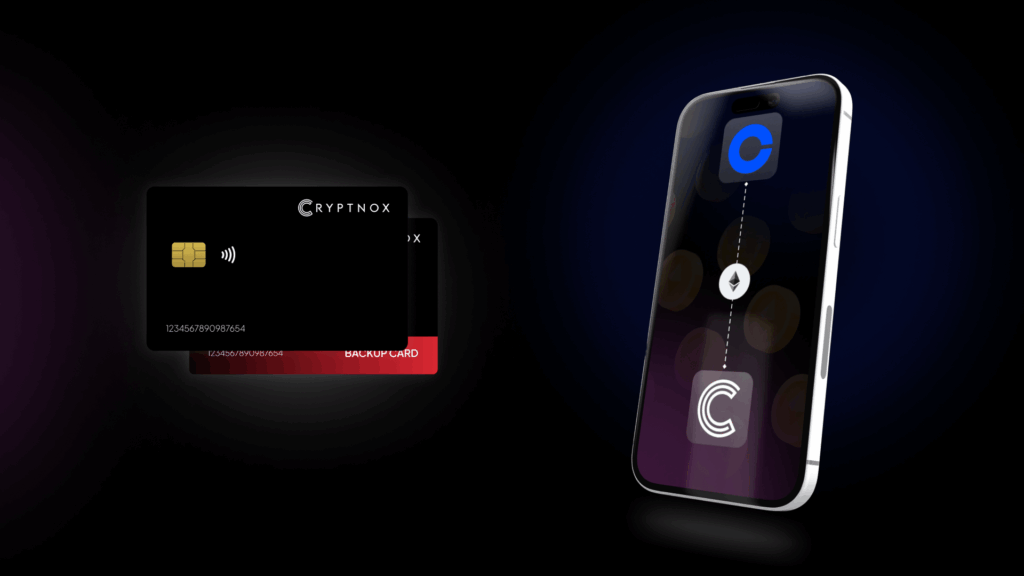
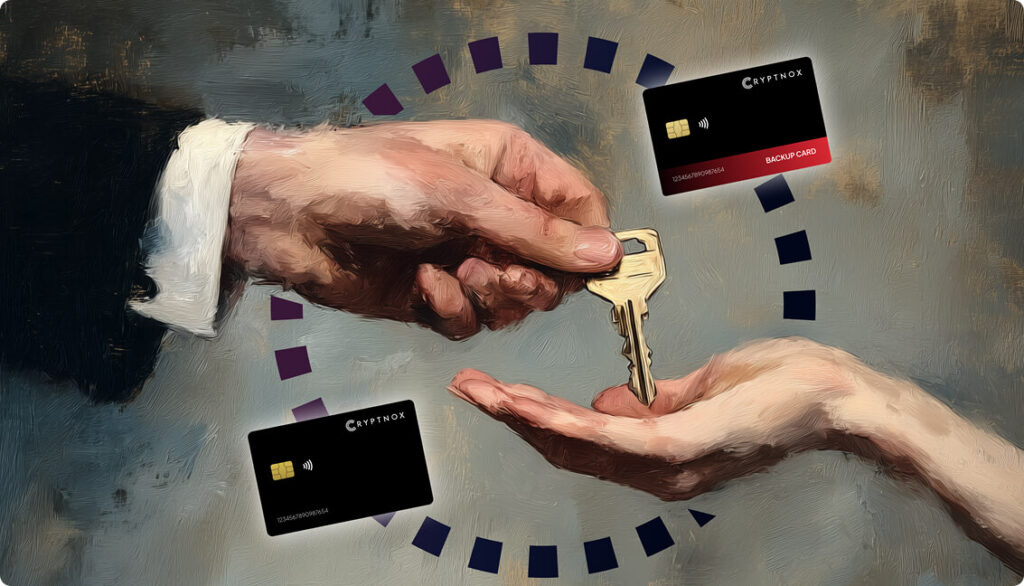
– Hardware Wallet: Provides secure crypto storage with a dual-card backup system, biometric authentication, and seamless Web3 integration. It supports multiple blockchain networks, including Ethereum and Bitcoin.
– Card Wallet as a Service (C-WAAS): Cryptnox offers White Label Crypto cards specifically designed for banks, fintech companies, and financial institutions. These customizable hardware wallet cards enable secure and user-friendly cryptocurrency management while providing full regulatory control, allowing institutions to maintain compliance and oversight over their crypto services.
Innovations and Certifications:
– Cryptnox is a member of the FIDO Alliance and their products are based on chips with certifications such as EAL6+ Common Criteria and FIPS 140-2 Level 3, ensuring high-security standards.
– Their solutions are designed for simplicity and user experience, with ongoing research into blockchain card dematerialization.
Target Audience:
Cryptnox products are designed for both individual consumers seeking secure crypto management and businesses like fintech firms and banks looking to integrate advanced security solutions into their payment ecosystems.
Rank | Wallet | Description |
2 | Ledger Nano X | The Ledger Nano X remains a top contender in 2025 for its blend of mobility and security. Priced at around $149, this Bluetooth-enabled hardware wallet supports over 5,500 cryptocurrencies and NFTs, making it versatile for diverse portfolios. Its secure element chip protects private keys offline, while the Ledger Live app allows seamless management, staking, and DeFi interactions. Beginners love the intuitive interface and mobile connectivity, eliminating the need for constant USB plugging. However, it requires careful handling to avoid potential supply chain vulnerabilities noted in past incidents. Pros include broad asset support, regular firmware updates, and integration with third-party wallets like MetaMask. Cons might involve the higher price compared to basic models and occasional app glitches. Overall, it’s ideal for users on the go who prioritize ease of use alongside robust security features, earning high marks in expert reviews for reliability and innovation in crypto storage solutions. |
3 | Trezor Safe 7 | Launched as Trezor’s flagship in 2025, the Safe 7 scores highly with its advanced features, priced at $249. It boasts a touchscreen, Bluetooth connectivity, and an auditable secure chip, enhancing usability while maintaining open-source transparency. Supporting thousands of coins, it excels in Bitcoin and altcoin storage, with built-in staking and exchange options via Trezor Suite. The device’s premium redesign offers a sharper screen and improved security against brute-force attacks. Users commend its air-gapped signing process and recovery options, though it lacks biometric features. Pros: Open-source code for verifiability, no battery dependency for core functions, and strong community support. Cons: Higher cost and potential learning curve for non-tech-savvy users. In comparisons, it outperforms predecessors in speed and interface, making it a favorite for security-conscious investors seeking a balance between cutting-edge tech and proven reliability in the hardware wallet space. |
4 | Tangem | Tangem revolutionizes cold storage in 2025 with its card-based wallet, starting at $54.90 for a set. Eliminating seed phrases, it uses NFC technology for tap-to-sign transactions, supporting multi-chain assets securely. Its air-gapped design ensures offline key storage, ideal for users dreading complex backups. The wallet’s simplicity shines for beginners, with no batteries or screens, just a durable card. Pros include affordability, portability, and resistance to physical tampering. Cons: Limited to mobile app integration and no desktop support. Reviews highlight its reliability for everyday use, like storing Ethereum or Bitcoin without hassle. Tangem’s unique backup system via multiple cards adds redundancy, preventing single-point failures. In expert rankings, it’s often the best overall for those valuing convenience over advanced features, providing peace of mind in a compact form that fits seamlessly into modern crypto lifestyles. |
5 | Ledger Stax | The Ledger Stax, at $399, brings luxury to crypto security in 2025 with its curved E Ink touchscreen and magnetic stacking design. Supporting crypto and NFTs, it integrates with Ledger Live for managing over 5,500 assets, staking, and Web3 interactions. Wireless charging and Bluetooth make it highly portable, while the secure element ensures offline protection. Users praise the aesthetic appeal and intuitive UX, perfect for displaying NFT art on the screen. Pros: Premium build, easy navigation, and robust ecosystem. Cons: High price and potential overkill for basic needs. Compared to the Nano series, it offers a more modern experience, though some note battery life could improve. In reviews, it’s lauded for bridging design and functionality, appealing to tech enthusiasts who want a stylish, secure wallet that stands out in the crowded hardware market. |
6 | NGRAVE Zero | NGRAVE Zero emphasizes maximum security in 2025, priced at $398, with its fully air-gapped, offline operation and biometric authentication. It supports major cryptocurrencies and features fireproof graphene plates for seed backup, ensuring durability against elements. The device’s EAL7+ certification sets a high bar for protection, with no USB or Bluetooth to minimize attack vectors. Pros: Unparalleled security, user-friendly interface despite complexity, and comprehensive recovery options. Cons: Bulky design and premium cost. Users in reviews appreciate the peace of mind from its tamper-proof build and QR-based transactions. Ideal for high-net-worth individuals, it excels in cold storage without compromises, outperforming competitors in security audits. NGRAVE’s focus on zero connectivity makes it a fortress for assets, recommended for those prioritizing defense over convenience in an era of increasing cyber threats. |
7 | SafePal S1 | Affordable at $49.99, the SafePal S1 is a solid entry-level hardware wallet in 2025, featuring air-gapped security via QR codes and a built-in camera. Supporting over 30 blockchains and thousands of tokens, it integrates with the SafePal app for DeFi and staking. No Bluetooth or Wi-Fi keeps it secure from remote attacks. Pros: Budget-friendly, portable, and easy setup. Cons: Monochrome screen feels dated, and QR scanning can be tedious. Reviews praise its Binance-backed reliability and frequent updates. Ideal for beginners dipping into crypto, it offers good value without sacrificing core security. In comparisons, it holds up against pricier options for basic needs, making it popular among cost-conscious users seeking offline storage for Bitcoin, Ethereum, and more in a compact, durable package. |
8 | Ellipal Titan | The Ellipal Titan, around $169, shines in 2025 with its air-gapped, touchscreen design and metal casing for durability. Supporting over 10,000 tokens across 40+ blockchains, it uses QR codes for transactions, ensuring no online exposure. Pros: Robust build against physical damage, large screen for easy navigation, and anti-tampering features. Cons: No USB connectivity, relying solely on QR, which may slow processes. Users highlight its cold storage excellence for DeFi and NFTs, with seamless app integration. In reviews, it’s favored for security in hostile environments, like travel. Compared to Ledger, it offers more offline assurance, appealing to paranoid investors. Ellipal’s focus on isolation makes it a top choice for safeguarding assets in a volatile crypto world. |
9 | COLDCARD Mk4 | Priced at $157, the COLDCARD Mk4 is Bitcoin-only in 2025, excelling in air-gapped security with microSD card transactions. Its open-source nature allows code verification, and features like duress PINs add layers of protection. Pros: Maximum Bitcoin focus, immune to hacks, and customizable. Cons: Limited to BTC, no multi-currency support. Reviews commend its uncompromising approach for long-term holders. Ideal for advanced users, it supports multisig and offline signing. In expert opinions, it’s the gold standard for Bitcoin security, outperforming generalist wallets in depth. COLDCARD’s emphasis on privacy and control makes it indispensable for serious BTC enthusiasts navigating 2025’s market. |
10 | D’CENT | D’CENT, at $139, incorporates biometric fingerprint security in 2025, supporting over 3,600 cryptocurrencies. Its compact design and OLED screen make setup straightforward, with app integration for staking. Pros: Added biometric layer, broad asset support, and good customer service. Cons: Higher price for features, potential fingerprint issues. Users praise its ease and security blend. In reviews, it’s recommended for mobile users wanting quick access without seeds. Compared to Trezor, it offers more modern auth. D’CENT’s focus on usability positions it well for everyday crypto management. |
11 | Keystone Pro | The Keystone Pro, $169, features a touchscreen and open-source firmware in 2025, excelling in DeFi and Bitcoin support. Air-gapped via QR, it supports multisig. Pros: Strong features, secure, and user-friendly app. Cons: Slow setup, QR friction. Reviews highlight its value for advanced users. Ideal for Web3 integration. Keystone’s balance of security and functionality makes it a rising star. |
12 | Cypherock X1 | Cypherock X1, $199, uses decentralized key sharding in 2025, splitting keys across devices for enhanced security. Supports major chains. Pros: No single failure point, open-source. Cons: Complex for beginners. Users love the redundancy. In reviews, it’s top for multisig. Cypherock innovates in key management. |
13 | OneKey Pro | At $278, OneKey Pro offers touchscreen and air-gapped security in 2025, with strong usability. Supports extensive assets. Pros: Polished app, advanced features. Cons: Short battery, premium price. Reviews note good experience. Suitable for pros. OneKey’s blend appeals broadly. |
14 | BC Vault ONE | BC Vault ONE, $182.50, supports millions of cryptos in 2025 with encrypted backups. No Bluetooth. Pros: Vast selection, secure. Cons: Interface clunky. Users appreciate variety. Ideal for diverse portfolios. BC Vault stands out for breadth. |
15 | Ledger Nano S Plus | Budget-friendly at $79, Ledger Nano S Plus supports 5,500+ assets in 2025 via USB. Pros: Affordable, secure chip. Cons: No wireless. Reviews call it beginner-friendly. Great entry point. Ledger’s reliability shines. |
Our products:
– Card Wallet as a Service (C-WAAS)
FAQ:
What is an external crypto wallet?
An external crypto wallet, also known as a non-custodial wallet, is a tool that allows you to store, manage, and transact cryptocurrencies independently of centralized exchanges or third-party services. Unlike wallets provided by platforms like Coinbase or Binance (which are custodial), external wallets give you full control over your private keys, meaning you’re solely responsible for security. They can be hardware devices, software apps, or even paper-based, and they interact directly with blockchain networks.
What are the different types of external crypto wallets?
There are several types, each with varying levels of security and convenience:
- Hardware Wallets: Physical devices like Ledger Nano S/X or Trezor that store keys offline. Ideal for long-term storage (cold storage) as they’re resistant to online hacks.
- Software Wallets: Apps or programs like Electrum, MetaMask, or Exodus that run on your computer, phone, or browser. They’re convenient for daily use but more vulnerable if your device is compromised.
- Paper Wallets: Printed QR codes or keys on paper, completely offline. Great for ultra-secure, long-term holding but impractical for frequent transactions and risky if lost or damaged.
- Mobile Wallets: A subset of software wallets optimized for smartphones, such as Trust Wallet or Mycelium, offering portability but with potential risks from device theft.
How does an external crypto wallet differ from a custodial wallet?
In a custodial wallet (e.g., on an exchange), the platform holds your private keys and manages security, similar to a bank account. You don’t have direct control, but it’s easier for beginners. External wallets put you in charge: you own the keys (“not your keys, not your crypto”), offering more privacy and autonomy but requiring you to handle backups and security. If you lose access, no one can recover it for you, unlike custodial services, which often have support.
What are the advantages of using an external crypto wallet?
- Enhanced Security: Your assets are less exposed to exchange hacks or bankruptcies (e.g., FTX collapse).
- Privacy: Transactions aren’t monitored by a central entity.
- Full Control: You can access your funds anytime without relying on a service’s uptime or policies.
- Portability: Easily move assets between wallets or blockchains.
- Decentralization: Aligns with crypto’s ethos of self-sovereignty.
What are the disadvantages or risks?
- Responsibility: If you lose your seed phrase or device, your funds are gone forever, no customer support to bail you out.
- Learning Curve: Setup and management can be intimidating for newcomers.
- Vulnerability to User Error: Phishing, malware, or physical theft can lead to losses.
- Limited Features: Some lack built-in fiat on-ramps or advanced trading compared to exchanges.
- Recovery Challenges: Restoring from backups requires careful handling.
How do I choose the right external crypto wallet?
Consider these factors:
- Your Needs: Hardware for high-value holdings; software for quick access.
- Supported Assets: Ensure it handles your cryptos (e.g., Bitcoin, Ethereum, or altcoins like Solana).
- Security Features: Look for open-source code, multi-signature support, and regular audits.
- User Reviews and Reputation: Check sites like Reddit or Wallet reviews for real-user experiences.
- Ease of Use: Beginners might prefer user-friendly options like Ledger or MetaMask.
- Cost: Hardware wallets range from $50–$200; software is usually free. Popular options include Ledger, Trezor, MetaMask, and Exodus. Research compatibility with your OS or device.
Our products: