Blogs

Best Physical Crypto Wallet in 2025

Best Physical Crypto Wallet in 2025

Protect your crypto with the right physical wallet. This guide explains what makes the best physical crypto wallet today, why card-based hardware wallets stand out, and how solutions like Cryptnox hardware wallet cards and FIDO2 smartcards give both individuals and institutions serious security without sacrificing ease of use.


Our products:

Hardware Wallet

FIDO2 Card

Card Wallet as a Service (C-WAAS)


Why a physical crypto wallet matters


Keeping coins on an exchange or only in a hot wallet app leaves you exposed to hacks, scams, and platform failures. In 2024 alone, attackers stole around 2.2 billion dollars in crypto through hacks and exploits, with DeFi platforms and centralized services among the main targets.


At the same time, the hardware wallet market is booming, which shows how many users are moving to offline storage. Recent research values the hardware wallet market at about 470 to 480 million dollars in 2024, with forecasts above 2.4 to 3.3 billion dollars by 2033, depending on the source, driven by rising security concerns and broader crypto adoption. If you hold meaningful value in crypto, treating security as an afterthought is simply not an option anymore.


What is a physical crypto wallet


A physical crypto wallet (also called a hardware wallet or cold wallet) is a dedicated device that stores your private keys offline. Instead of trusting a phone or a computer that is connected to the internet and exposed to malware, you approve transactions on a secure device that never reveals its keys.


Key benefits of physical wallets


Here are the main reasons serious holders move to physical wallets:


  • Offline private keys (no direct internet exposure, far lower risk of remote hacks).
  • Protection against phishing and malware, since the device asks you to confirm what you sign.
  • Clear separation between daily spending and long-term storage, similar to having a current account and a vault.
  • More control over backups, often using seed phrases or dual card schemes instead of trusting a third party.


For many users, a card-based hardware wallet is especially appealing, because it feels familiar (like a payment card) while still hiding powerful security inside.


What makes the best physical crypto wallet


Not all hardware wallets are equal. When choosing the best physical crypto wallet for your needs, look at these key criteria:


1. Security level of the secure element


The secure element is a tamper-resistant chip that stores keys and runs sensitive cryptographic operations. Common Criteria Evaluation Assurance Level (EAL) ratings run from EAL1 to EAL7, with higher numbers meaning deeper security testing and stronger guarantees.


An EAL6+ certified secure element is considered a very high assurance level, with extensive testing for strong hardware and software protections, making it suitable for environments where attackers may have physical access to the device. This type of chip is commonly used in smart cards and high-security ID documents, which is exactly what you want guarding your crypto.


2. Resistance to phishing and account takeover


Many crypto losses do not come from breaking cryptography, but from tricking users. A strong physical wallet should:


  • Verify transaction details on a secure interface before you approve them.
  • Support standards like FIDO2 for phishing-resistant authentication when used as a login key.
  • Keep private keys on the device at all times.


For example, a FIDO2 Level 1 certified smartcard can provide single-factor or two-factor login without exposing secrets, making it valuable for both personal and enterprise accounts.


3. Simple setup and backup


A complicated setup is one of the main reasons people delay securing their assets. The best wallets keep the process clear:


  • Straightforward initialization with step-by-step guidance in the mobile app.
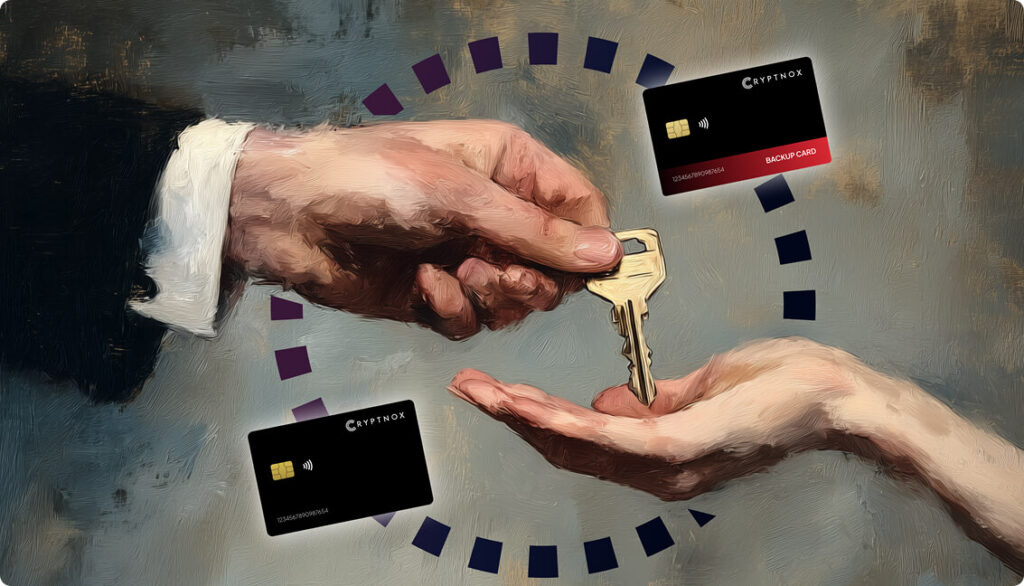
  • Clear backup flow, ideally with more than one card or device for redundancy, so a single loss does not destroy your funds.
  • Easy restore from backup without exposing the seed to a camera or a keyboard.


Cryptnox emphasizes a very simple initialization and backup process with a secure card set and an intuitive mobile app, which reduces user errors and makes strong security more accessible.


4. User experience and daily usability


A physical wallet should not feel like a burden. Key aspects include:


  • A smooth mobile app for signing transactions, viewing balances, and managing multiple assets.
  • NFC support for card-based wallets, so you can tap your card instead of dealing with cables.
  • Clear messages and prompts, so even non-technical users feel comfortable.


If a wallet feels confusing, people either stop using it or make risky shortcuts, so user experience is as important as raw security.


5. Flexibility for individuals and institutions


The best physical crypto wallets serve both retail holders and professional users:


  • Individuals get easy, secure storage for their coins and tokens.
  • Exchanges, fintech companies, and banks can integrate card-based wallets directly into their payment flows.


How to choose the best physical crypto wallet for you


When picking your wallet, start with a few practical questions:


What type of user are you


  • If you are a long-term holder who rarely moves funds, you need ultra-strong cold storage, high-assurance chips, and dependable backups.
  • If you are an active trader or DeFi user, you need a balance between security and speed, with a mobile app and NFC-style signing that fits your routine.
  • If you work in a company that manages client assets, you need scalable solutions like card-based wallets that can be issued, rotated, and replaced at scale.


A card-based hardware wallet with strong mobile integration is one of the easiest ways to align high security with everyday practicality.


Features checklist for a top physical wallet


Use this quick checklist when comparing options:


  • Secure element with high EAL level (ideally EAL6+).
  • Seed backup and restore that you actually understand and feel comfortable using.
  • Mobile support (Android and iOS) with clear signing flows and account overview.
  • Option to use the same card as a FIDO2 security key for account login and 2FA.
  • Good documentation, tutorials, and support from the provider.


Best Physical Crypto Wallet


1) Cryptnox – Best Physical Crypto Wallet


Cryptnox specializes in advanced smart card technology for blockchain applications, focusing on secure authentication and digital asset management. Their solutions cater to both consumers and businesses, offering a seamless and user-friendly experience.


Key Features and Products


FIDO2 Smartcard: Offers secure single- or two-factor authentication with FIDO2 Level 1 certification, ideal for personal and enterprise use. It supports passwordless authentication and is compatible with various platforms like Gmail, Facebook, and more.

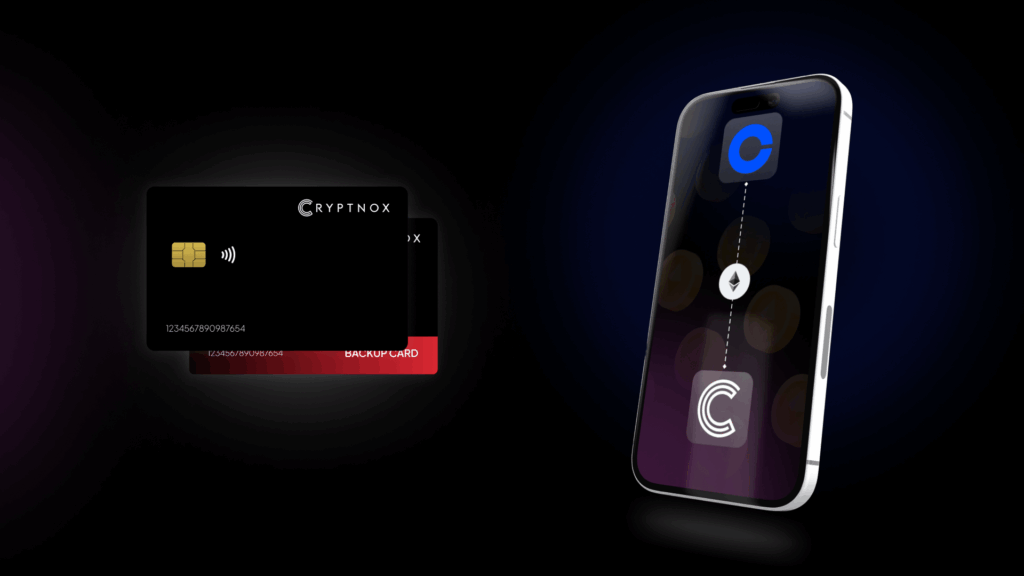
Hardware Wallet: Provides secure crypto storage with a dual-card backup system, biometric authentication, and seamless Web3 integration. It supports multiple blockchain networks, including Ethereum and Bitcoin.

Card Wallet as a Service (C-WAAS): Cryptnox offers White Label Crypto cards specifically designed for banks, fintech companies, and financial institutions. These customizable hardware wallet cards enable secure and user-friendly cryptocurrency management while providing full regulatory control, allowing institutions to maintain compliance and oversight over their crypto services.


Innovations and Certifications:


– Cryptnox is a member of the FIDO Alliance and their products are based on chips with certifications such as EAL6+ Common Criteria and FIPS 140-2 Level 3, ensuring high-security standards.

– Their solutions are designed for simplicity and user experience, with ongoing research into blockchain card dematerialization.


Target Audience:


Cryptnox products are designed for both individual consumers seeking secure crypto management and businesses like fintech firms and banks looking to integrate advanced security solutions into their payment ecosystems.


Shop now


Rank

Wallet Name

Description

2

Ledger Nano X

The Ledger Nano X is a premium Bluetooth-enabled hardware wallet with robust security via a CC EAL5+ certified secure element, supporting over 5,500 cryptocurrencies, including Bitcoin, Ethereum, and NFTs. Key features include mobile connectivity, staking, swaps through Ledger Live, and integration with third-party wallets like MetaMask. It allows up to 100 apps simultaneously for diversified portfolios. Security emphasizes offline private key storage, independent of third parties. Pricing is around $150. Compatibility spans iOS, Android, and desktop via Ledger Live. User reviews praise its mobility and security, though past data breaches are noted. For 2025, firmware updates enhance protection, with multilingual support and global popularity underscoring reliability.

3

Trezor Safe 3

The Trezor Safe 3 is a secure, open-source hardware wallet with a Secure Element (EAL6+) and color touchscreen, supporting over 9,000 coins, including Bitcoin and Ethereum. Features include Shamir Backup, WalletConnect for DeFi, and integration with Trezor Suite for staking and swaps. Security focuses on transparency with community audits and air-gapped design. Priced at $79, it’s beginner-friendly. Compatibility includes desktop and mobile via Trezor Suite. User reviews highlight trust and simplicity, with a 4.6/5 Trustpilot rating. For 2025, updates include enhanced iOS/Android support and quantum-ready security in the Safe 7 lineup.

4

Ledger Nano S Plus

The Ledger Nano S Plus is a budget-friendly USB-connected hardware wallet with CC EAL5+ security, supporting over 5,500 assets like Bitcoin, Ethereum, and NFTs. Features include up to 100 apps via Ledger Live for staking and DeFi, with 24-word seed recovery. Security ensures offline key storage. Priced at $79, it’s ideal for beginners. Compatibility includes desktop and mobile integrations like MetaMask. User reviews commend affordability and reliability. For 2025, firmware updates improve security, with multilingual interfaces.

5

Trezor Model T

The Trezor Model T is an open-source touchscreen wallet supporting thousands of cryptocurrencies like Bitcoin and Ethereum. Features include Shamir Backup, WalletConnect for DeFi, and Trezor Suite integration. Security via a secure processor and community audits. Priced at $169, with microSD backups. Compatibility with desktop/mobile. User reviews praise usability and transparency, rated 4.6/5. For 2025, updates enhance data protection.

6

SafePal S1

The SafePal S1 is a fully air-gapped, 100% offline hardware wallet supporting Bitcoin, Ethereum, and thousands of assets across multiple blockchains. Features include in-app swaps, staking, NFT management, and DApp connections. Security via non-custodial key storage. Pricing not specified, but Black Friday deals offer 15% off. Compatibility with iOS/Android and browser extensions. User reviews praise the user-friendly design. No 2025 updates mentioned.

7

Ellipal Titan

The Ellipal Titan is an air-gapped cold wallet supporting swaps, buying/selling, staking, and 200+ DApps via MetaMask/WalletConnect. Security includes 100% offline design, anti-tamper tech, and protecting $12B assets with zero hacks. Supports 40+ blockchains, 50+ stablecoins, 10,000+ tokens like BTC, ETH, SOL. Pricing not specified. Compatibility with BIP-39. User reviews highlight ease of setup. No 2025 updates.

8

OneKey Pro

The OneKey Pro is a secure hardware wallet with air-gap support, EVM decoding, and SOL signing. Features include seamless backups and app integration. Security emphasizes bank-grade protection. Supported assets align with EVM/SOL. Pricing not specified. Compatibility with web apps, extensions like Sparrow. User reviews not provided. 2025 updates include MetaMask air-gap, EVM/SOL enhancements, and the staking page.

9

GridPlus Lattice1

The GridPlus Lattice1 is a secure hardware wallet with a five-inch touchscreen for transaction visibility, supporting Ethereum, Bitcoin, and EVM networks. Features include human-readable signing, unlimited wallets via SafeCards, and DeFi integrations. Security via enterprise-grade chips against physical/digital threats. Supported assets include major cryptos. Pricing $397. Compatibility with software wallets. User reviews note premium UX. No 2025 updates.

10

D’Cent

D’Cent is a biometric cold wallet with fingerprint authentication, offline storage, supporting 85 mainnets and 4,600+ cryptos like BTC, ETH, XRPL. Features include portfolio management, dApp browser, and market insights. Security via cryptography, zero hacks. Pricing not specified. Compatibility iOS/Android. User reviews 5-star on Trustpilot for support, UX. 2025 updates: UX/UI revamp (Q1), multi-wallet (Q4), BRC-20 (Q1 2026).

11

BitBox02

The BitBox02 secures coins offline with a dual-chip design, open-source code, supporting Bitcoin, Litecoin, Cardano, Ethereum, and 1500+ tokens. Features microSD backup, touch sliders, and U2F. Security audited, multisig. Pricing not specified. Compatibility with desktop/mobile apps. User reviews praise reliability, the highest Trustpilot rating. No 2025 updates.

12

Ngrave Zero

The Ngrave Zero is an air-gapped wallet with EAL7 certification, touchscreen, biometrics, supporting BTC, ETH, 14+ coins, ERC-20/ESDT tokens, and NFTs. Features offline signing, MetaMask integration. Security military-grade, custom OS. Pricing via store. Compatibility mobile app. User reviews 4.7/5 Trustpilot. No 2025 updates.

13

Tangem

Tangem is a card-like wallet with a secure chip, supporting thousands of cryptos/tokens. Features offline key generation, 3-minute setup, and multi-card backup. Security EAL6+, audits, non-extractable keys, IP68 resistant. Pricing $54.90+. Compatibility with NFC smartphones. User reviews 4.9/4.8 App Store/Google Play. 2025: Kudelski audits, open-source app, 25-year warranty.

14

KeepKey

KeepKey is a hardware wallet with offline key generation, PIN/passphrase, and 12-word seed. Features: Thorchain swaps, large display. Security audited open-source firmware, military-grade encryption. Supported assets exceed competitors. Pricing not specified. Compatibility desktop app. User reviews are not mentioned. No 2025 updates.

15

Keystone 3 Pro

The Keystone 3 Pro is an air-gapped wallet with three secure chips, an anti-tamper design, supporting 5,000+ cryptos, including BTC, ETH, and SOL. Features touchscreen, fingerprint, and multi-seed support. Security offline storage, EAL5+ chips. Pricing not specified. Compatibility MetaMask, OKX, etc. User reviews praise security. No 2025 updates mentioned.


Our products:

Hardware Wallet

FIDO2 Card

Card Wallet as a Service (C-WAAS)


FAQ:


1. What is a physical crypto wallet?


A physical crypto wallet, also known as a hardware wallet, is a dedicated device designed to securely store the private keys for your cryptocurrencies offline. Unlike software wallets on your phone or computer, it’s a tangible piece of hardware, often resembling a USB drive, that keeps your keys isolated from the internet, reducing the risk of online hacks. These devices sign transactions offline and only connect briefly to broadcast them via a computer or app. Popular examples include Ledger and Trezor models. They provide true ownership of your assets, as emphasized by manufacturers like Trezor, ensuring you’re not reliant on exchanges for security.


2. How does a hardware wallet work?


Hardware wallets generate and store your private keys within a secure chip on the device, never exposing them to the internet. When you want to send crypto, you connect the wallet to a computer or mobile app (via USB, Bluetooth, or QR code), review the transaction details on the device’s screen, and approve it with buttons or a touchscreen. The signed transaction is then sent online through the connected device, but the keys remain offline. This air-gapped process protects against malware. For receiving funds, you simply share your public address. Setup involves creating a seed phrase for backup, and many integrate with apps like Ledger Live or Trezor Suite for management.


3. What are the advantages of using a hardware wallet over other types?


Hardware wallets offer superior security by keeping private keys offline, making them immune to remote hacks that plague hot wallets (online software wallets). They provide physical confirmation of transactions, reducing phishing risks, and support self-custody, meaning you control your assets without third-party intermediaries like exchanges. Additional benefits include portability, compatibility with multiple cryptocurrencies, and features like staking integration. They’re ideal for long-term holders (HODLers) as they allow your crypto to appreciate in value while stored securely. 


4. Are hardware wallets safe?


Yes, hardware wallets are among the safest options for storing crypto, as they use secure elements (chips certified to standards like CC EAL5+ or higher) to protect keys from physical and digital attacks. They’re designed to withstand tampering, with features like self-destruct mechanisms on some models. However, safety depends on user practices, avoid sharing seed phrases, buy from official sources to prevent pre-compromised devices, and keep firmware updated. No wallet is 100% hack-proof, but reputable brands like Ledger and Trezor have strong track records, with independent audits. In 2025, advancements like biometric authentication further enhance security.


5. Can hardware wallets be hacked?


While highly secure, hardware wallets aren’t entirely unhackable. Potential vulnerabilities include supply chain attacks (e.g., fake devices), physical theft combined with brute-force PIN attempts, or firmware exploits if not updated. However, private keys never leave the device, so remote hacks are nearly impossible without physical access. Brands like Trezor emphasize open-source code for community audits to catch issues early. To minimize risks, use passphrases, store seed phrases securely offline, and avoid connecting to untrusted computers. In rare cases, like past Ledger data breaches (not affecting keys), user info was exposed, but assets remained safe.


6. Do hardware wallets need internet to function?


No, hardware wallets operate offline for key storage and transaction signing, which is their core security feature. You only need internet on a connected device (computer or phone) to broadcast signed transactions to the blockchain or check balances via apps. Some models, like Ledger Nano X, use Bluetooth for mobile connectivity, but the wallet itself remains air-gapped. For fully offline use, models like Ellipal or SafePal rely on QR codes. This setup ensures keys are never exposed online, making them “cold” storage.


7. How do I set up a hardware wallet?


Setup typically involves unboxing the device, connecting it to a computer or app, and following on-screen prompts to generate a new wallet. You’ll create a PIN for access, then receive a 12-24 word seed phrase, write this down securely offline as it’s your backup. Install the manufacturer’s software (e.g., Ledger Live), add cryptocurrency accounts, and fund them by sending assets to your public addresses. Always verify the device isn’t tampered with and buy from official sites. The process takes 10-30 minutes and is beginner-friendly with guides provided.


8. What happens if I lose my hardware wallet?


If lost, you can recover your funds using the seed phrase on a new compatible device. Enter the phrase during setup to restore access, your crypto is on the blockchain, not the device. Avoid storing the seed digitally; use metal backups for durability. If the wallet is stolen, a PIN or passphrase prevents unauthorized access, and some devices erase after failed attempts. Always report losses and monitor addresses. Recovery is straightforward but requires the seed; without it, funds are irretrievable.


9. Which cryptocurrencies are supported by hardware wallets?


Most hardware wallets support major assets like Bitcoin, Ethereum, and thousands of ERC-20 tokens, plus altcoins such as Solana, Cardano, and NFTs. Support varies by brand; Ledger handles over 5,500, Trezor over 9,000, and others like Tangem or Ellipal cover 10,000+. Check the manufacturer’s app or site for compatibility, as firmware updates add new ones. In 2025, broader multi-chain support is common, including DeFi tokens and layer-2 networks.


10. What’s the difference between hot wallets and hardware (cold) wallets?


Hot wallets are software-based and always online (e.g., mobile apps like MetaMask), making them convenient for frequent transactions but vulnerable to hacks. Hardware wallets are cold storage, physical, and offline, prioritizing security for long-term holdings. Hot wallets are free and quick, while hardware ones cost $50-300 and require physical interaction. Use hot for small amounts and hardware for larger sums. Both can integrate, like using hardware to sign hot wallet transactions.


Our products:

Hardware Wallet

FIDO2 Card

Card Wallet as a Service (C-WAAS)

Related blog posts