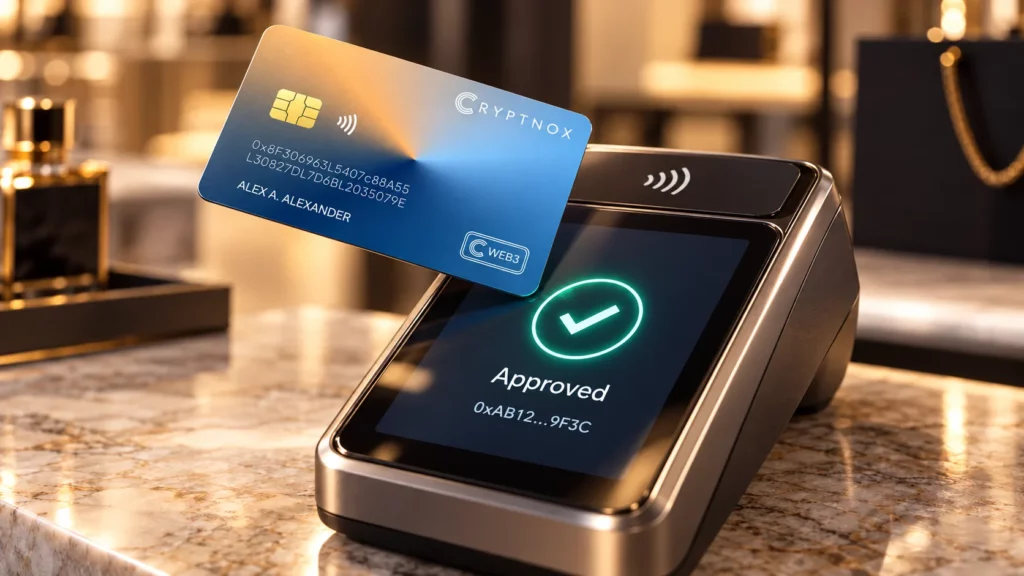
C-WaaS (Card Wallet as a Service) lets a bank, a fintech or a retailer launch and run its own card scheme on public blockchains: secure-element cards, an issuer backend that authorises every payment, branded cardholder apps and a point of sale application for merchants. The cardholder’s key never leaves the card; the issuer enforces the rules; settlement is on chain, per transaction.
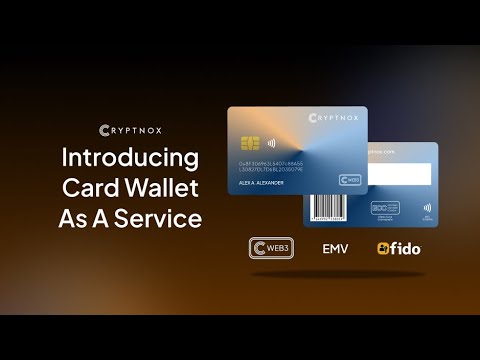
C-WaaS is blockchain-native card scheme infrastructure enabling card issuance, payment processing and direct on-chain settlement. Three words describe the stack.
Cards with an EAL6+ certified secure element are personalised through a patented process that lets no party in the logistics chain see a secret. Cards ship ready to activate; a replacement card carries the same account.
The issuer backend authorises every payment against the operator's rules: limits, allowed assets, allowed recipients, screening, freezes. The card signs only with that authorisation. Terminals and apps relay; they never hold keys.
The signed transaction is broadcast to a public chain and settles per payment, in the stablecoin or asset the operator chose. Transaction fees can be sponsored so a payment is simply a payment.
| Function | Legacy card scheme | C-WaaS |
|---|---|---|
| Network and settlement | Scheme network, daily settlement | Public blockchain, per transaction |
| Authorisation | Issuer host answers the scheme | Issuer backend authorises; the card refuses to sign without it |
| Acceptance | Acquirers and certified terminals | C-WaaS POS application; merchants registered with the operator |
| Rules and economics | Set by the scheme | Set by the scheme operator |
The cardholder’s key stays in the card’s EAL6+ certified secure element; the issuer holds a separate authorisation key. A payment needs both, so the issuer cannot move funds and the cardholder cannot bypass the rules. Cryptnox positions this as qualifying for self-custody treatment under EU and Swiss frameworks.
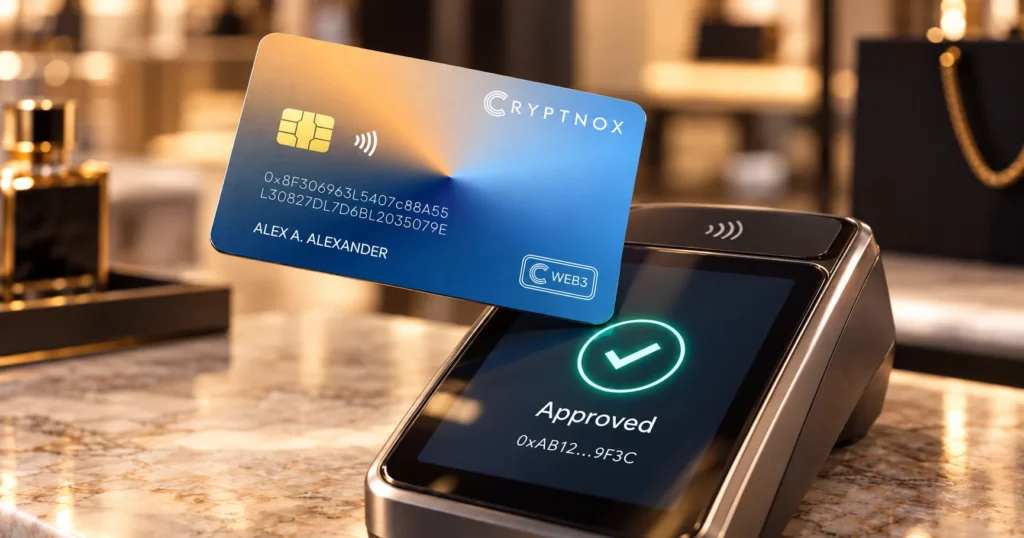
Cards arrive personalised and ready to activate with a QR code and a tap.
A lost card is frozen by the issuer and replaced by a card carrying the same key.
US 11,791,996 B2, 12,101,400 B2, 12,132,824 B2 and 12,719,697 B2, EP 4 060 540 B1; also granted in China: ZL 202211056164.7 (secure-element PKI). Pending: European applications EP 4 258 596 A1 (institutional card issuance) and EP 4 148 608 A1 (card authentication and key certification), and further applications.
The same technology powers the Shamir Secret Sharing cards for institutional key backup.
Card Options

The C-WaaS wallet application alone: your scheme’s card, accepted at C-WaaS terminals, in the app and in Web3 (WalletConnect, MetaMask).

The C-WaaS wallet application plus an EMV payment application (Mastercard or Visa) on one card. At any scheme terminal it is a normal card processed by your issuer processor; at a C-WaaS terminal your own scheme answers. The migration path most banks choose.

Dual-Tech plus a FIDO2 security key: the card that pays is also the card that logs the customer into online banking.
A card scheme is only as real as the places that accept its cards. C-WaaS includes a point of sale application for standard payment hardware: Linux payment terminals, Android POS devices and compact NFC readers for kiosks and unattended use. Merchants register directly with the scheme operator and are paid in stablecoin to their own wallet. There is no acquirer and no processor in between.
Below a threshold the operator sets, a tap is approved in one to three seconds in our development environment, with no phone and no passcode.
The cardholder confirms in the app or enters a POS passcode on the terminal, exactly as contactless limits work today.
The terminal relays between card and issuer and keeps only its own identity in a Secure Access Module. It cannot sign, redirect or read a card.
Mobile App
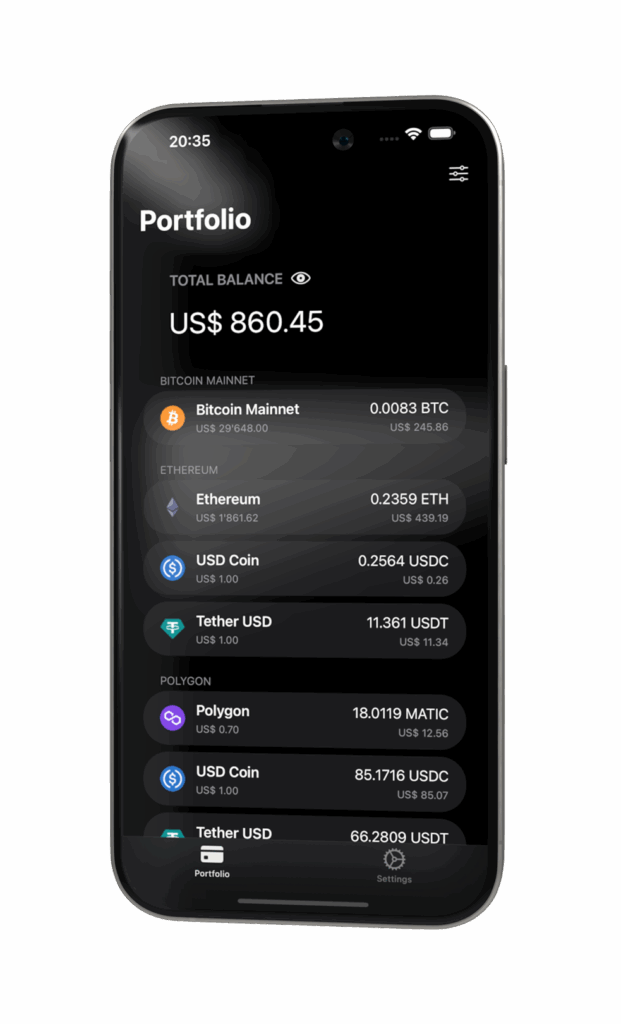
iOS and Android apps in the operator’s brand.
NFC pairing, PIN or Face ID, card freeze, transaction history.
EVM chains and ERC-20 stablecoins (USDC, USDT), Solana, Tron and Bitcoin; WalletConnect and MetaMask for Web3.
Integration
Issuance
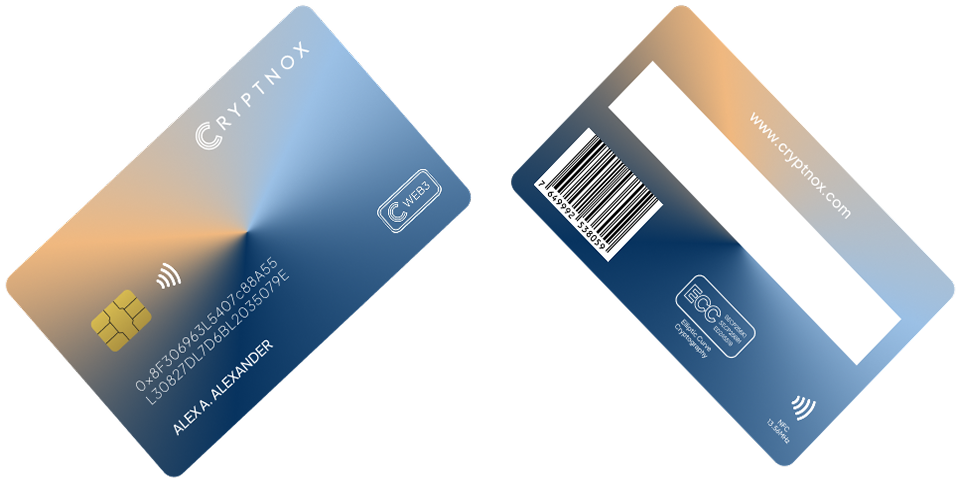
Received by mail. Cards ship personalised through the patented issuance process (US 12,132,824 B2).
No backup ceremony. Nothing to write down, nothing to store.
Replacement by the issuer. Same account on a new card.
No desktop software. Phone and card only.
Minutes to the first payment. Scan, tap, pay.
A card experience, not a crypto experience. The cardholder never sees a seed phrase or a gas fee.
Authorisation
In the app
The cardholder approves the payment in the app and taps the card.
The app sends the transaction to the issuer backend.
The backend applies the operator’s rules: limits, allowed assets, allowed recipients and smart contracts, screening, freezes.
The backend returns an authorisation element only this card can use.
The card verifies it and signs; the transaction is broadcast and settles on chain.
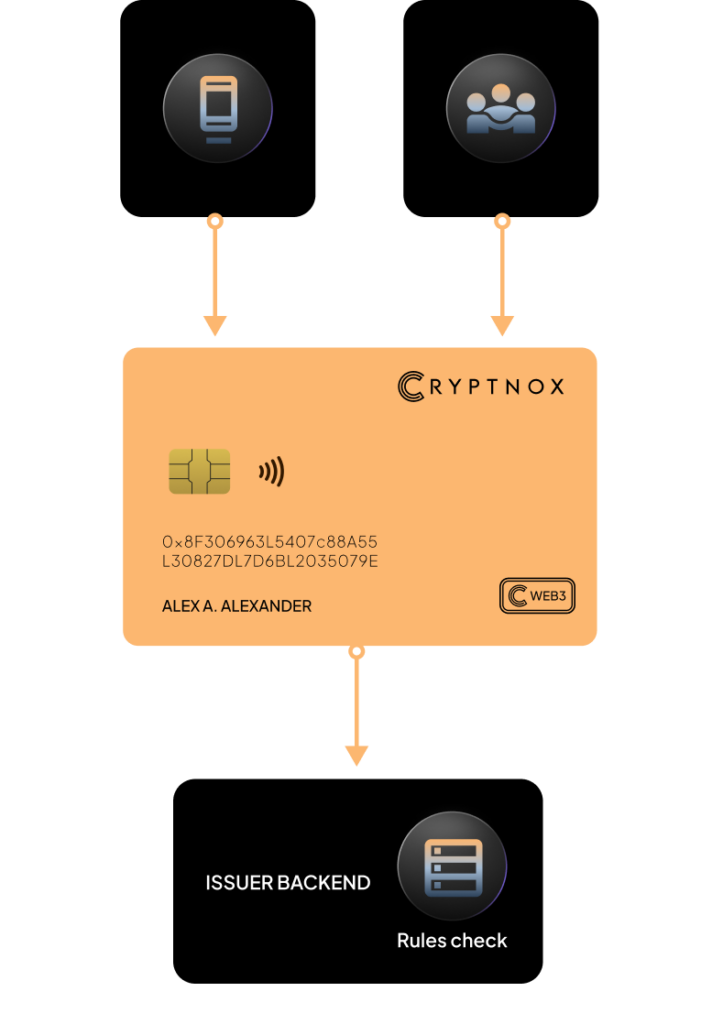
Every signature requires the cardholder's card and the issuer's authorisation of that exact transaction. There is no card number to steal and nothing reusable at a merchant, which is why the card-not-present fraud category does not exist on C-WaaS.
Key Management

The card’s own identity keys are generated inside the secure element. The blockchain key arrives in an issuer envelope signed and encrypted for that one card, which verifies it before it decrypts (US 12,132,824 B2).
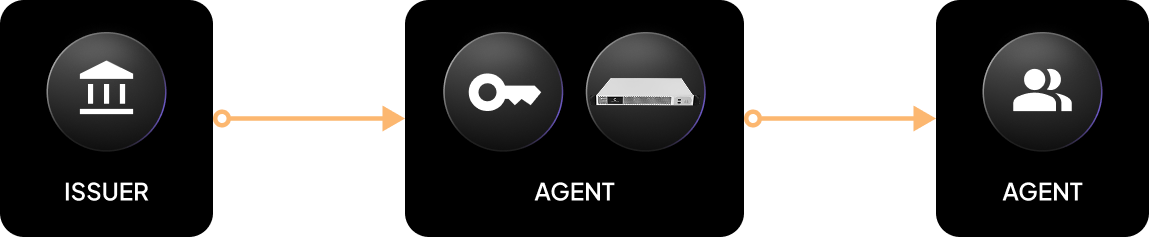
Every exchange between the backend and the card is encrypted end to end; terminals and phones relay.
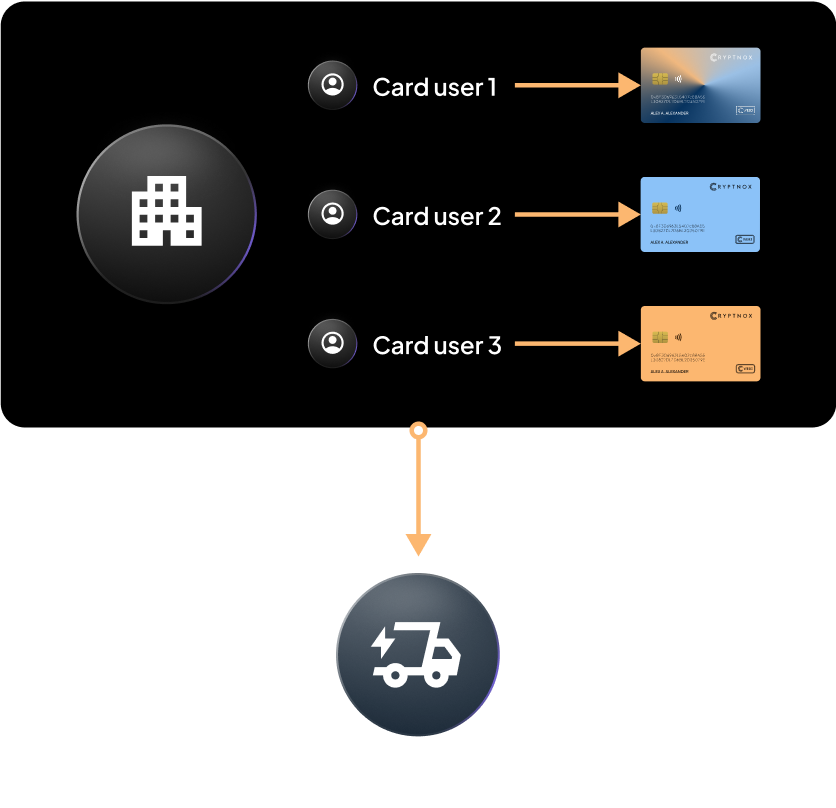
Issuance, personalisation and shipping run as one automated flow from the backend.
Onboarding
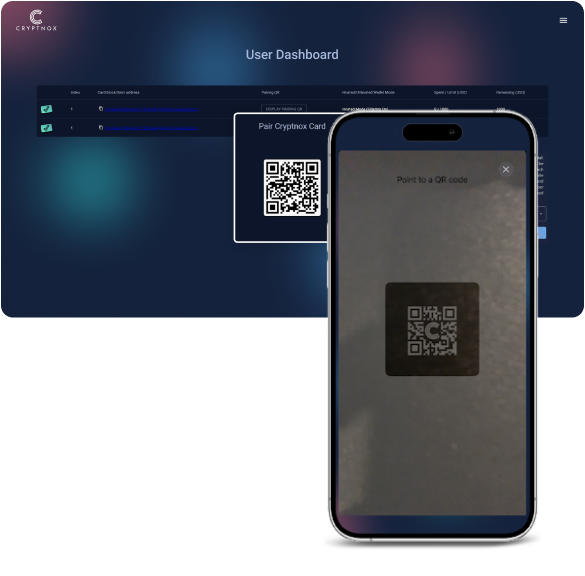
1. Scan a QR code online in the client user account.
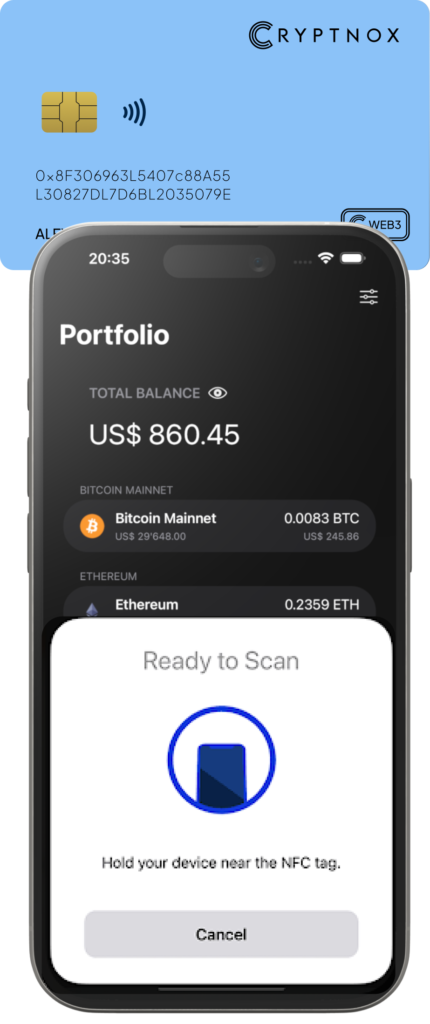
2. Tap the card at the back.
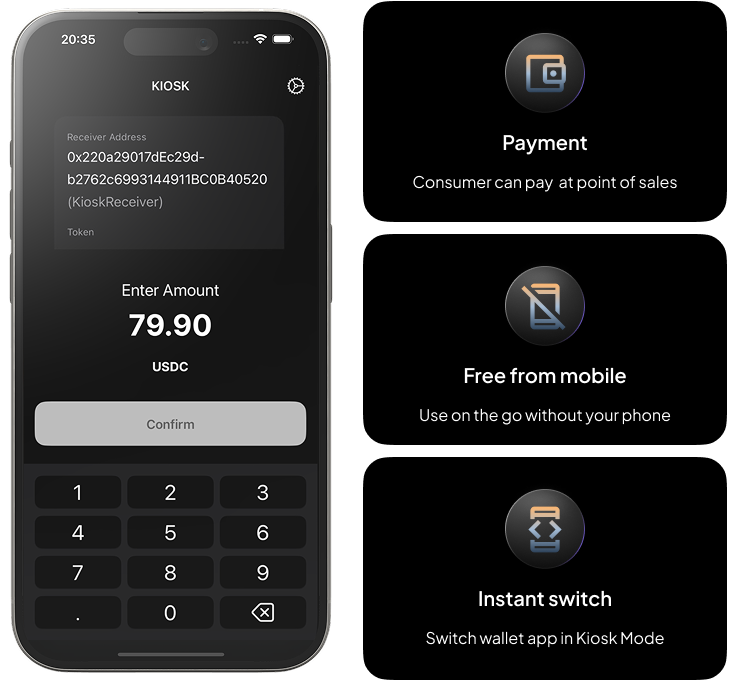
The card works without a phone: kiosk mode lets branches, events and unattended points serve cardholders with the card alone.
Benefits
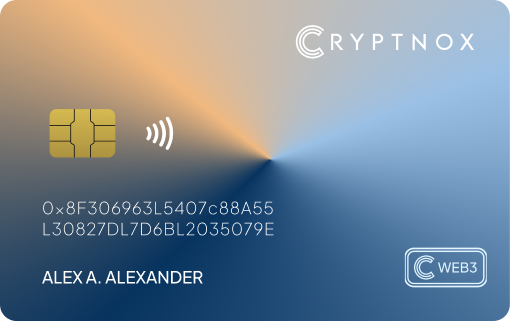
A card experience with no seed phrase; their own key in their own card; tap to pay, app payments and Web3; a replacement card if lost; no card number that can be stolen.
Acceptance without an acquirer; settlement to their own wallet per transaction; a terminal that holds nothing worth stealing; no chargebacks after settlement.
Their own brand, rules, pricing and economics; issuer control without custody; no scheme membership, BIN or scheme certification on the C-WaaS side; a Dual-Tech path next to an existing Mastercard or Visa product.
Cryptnox C-WaaS is blockchain-native card scheme and payment processing infrastructure that enables issuers to provision cards, authorise transactions and settle payments directly on chain, under their own brand and rules.
A credit-card-sized NFC smart card with an EAL6+ certified secure element that holds the cardholder's blockchain keys. The card signs each payment after the issuer has authorised it; the phone or the terminal relays and the transaction settles on chain. There is no legacy card scheme in the payment path. The Dual-Tech and Triple-Tech configurations add an EMV application and FIDO2 login on the same card.
Banks, fintechs, retailers, communities and corporates that want to run their own card scheme rather than a white-label card programme: their brand, their rules, settlement on a public chain, and no card-not-present fraud. The operator keeps compliance controls and licences; the cardholder keeps the key.
Through issuer-controlled co-signing, protected by US patent 12,719,697 B2 (granted August 2026). The card signs a transaction only after two independent checks succeed: the cardholder authenticates to the card, and the issuer's server returns an authorisation element after compliance-checking the transaction details. The server can enforce maximum amounts, allowed tokens, allowed recipients and smart contracts, sanctions screening, and freeze a lost card. It can approve, but it cannot spend: the private key never leaves the secure element, which is why the architecture qualifies as self-custody under EU and Swiss regulations. Classification of a specific programme depends on who holds recovery and administrative powers in aggregate; Cryptnox designs for the favourable case and the operator confirms with counsel.
| Question | Custodial card programme | Cryptnox C-WaaS card |
|---|---|---|
| Who holds the private key? | The provider, in its own systems | The cardholder's card, inside the secure element |
| Who approves a transaction? | The provider signs on the customer's behalf | The cardholder signs on the card; the issuer authorises after policy checks |
| Can the provider move funds alone? | Yes | No: the issuer can approve but cannot spend |
| Seed phrase for the customer? | Usually none, because the provider is the custodian | None: cards ship personalised; a replacement card carries the same key |
The issuer backend runs hosted by Cryptnox or in the operator's own AWS account, with REST APIs and SDKs for issuance, card lifecycle, policy and reporting, and is API-ready for EMV issuer processors (see Integration and APIs above).
Shamir secret sharing for key recovery (US 11,791,996 B2), secure key injection (US 12,101,400 B2), seedless initialisation (US 12,132,824 B2), issuer-controlled co-signing (US 12,719,697 B2), whose European counterpart EP 4 258 596 A1 is under examination, a secure-element signing device with N-of-M authorisation (EP 4 060 540 B1) and secure-element PKI and blockchain attestation (Chinese patent ZL 202211056164.7). A further European application, EP 4 148 608 A1, covers smart card authentication and key certification. Two further international applications filed in 2026 cover tap-to-pay authorisation at merchant terminals and management of a card's credentials after issuance. Cards are made in Switzerland. See the patent portfolio.
Need bespoke on-card logic, such as transaction filtering enforced inside the secure element? See custom smart card development. For institutional key backup across a quorum of cards, see the Shamir secret sharing cards.
Cryptnox C-WaaS is blockchain-native card scheme and payment processing infrastructure that enables issuers to provision cards, authorise transactions and settle payments directly on chain. It includes secure-element cards, the issuer backend, branded cardholder apps and a point of sale application. The name expands to Card Wallet as a Service.
C-WaaS is the infrastructure. The bank, fintech or other organisation that deploys it runs its own card scheme under its own brand, rules and licences. Cryptnox does not operate a scheme and is not a member of one.
The C-WaaS application settles on chain and does not connect to Visa or Mastercard. A Dual-Tech card adds an EMV application on the same card, processed by your issuer processor, so the card also works at every scheme terminal.
The cardholder's key is provisioned into the card's EAL6+ certified secure element through the patented issuance process, and it never leaves the card. The issuer holds a separate authorisation key. A payment needs both, so neither can act alone. Cryptnox positions this as qualifying for self-custody treatment under EU and Swiss frameworks; classification of a specific programme depends on who holds recovery and administrative powers in aggregate.
No. Cards ship personalised and ready to activate. If a card is lost, the issuer freezes it and issues a replacement carrying the same key.
The issuer backend applies the operator's rules to the exact transaction and returns an authorisation element only that card can use; the card verifies it and signs; the transaction is broadcast and settles on chain. Above a configurable threshold the cardholder adds a second factor in the app or with a POS passcode at the terminal.
Through the C-WaaS point of sale application on standard payment hardware. Merchants register directly with the scheme operator, enrol their terminals and are paid to their own wallet, per transaction, with no acquirer in between.
EVM chains with ERC-20 stablecoins such as USDC and USDT, Solana, Tron and Bitcoin. The operator chooses which assets its cards can hold and spend.
Yes. A Dual-Tech card keeps your Mastercard or Visa product with its issuer processor (Episode Six, Paymentology, Marqeta and others) and adds your own blockchain-native scheme on the same card. The C-WaaS backend is API-ready for EMV processors.
There is no card number, expiry or security code. Every payment needs a fresh signature from the card's secure element over that exact transaction plus the issuer's authorisation, so stolen data cannot produce a payment and merchants hold nothing reusable.
Yes. Instead of reselling a white-label card from a provider that holds the keys and runs the network, the operator issues cards under its own brand on its own blockchain-native card scheme: the cardholder keeps the key in the card, the operator sets the rules, and settlement is on chain.
It depends on the configuration (Single-, Dual- or Triple-Tech), the branding of the apps and the integrations on the operator's side. Cryptnox runs a scoping workshop first, then a gated pilot. Contact Cryptnox with your use case and volumes.
Certification statements refer to the NXP secure element and JCOP platform in their evaluated configurations, not to the finished card. Regulatory qualification of a specific program depends on the issuer's jurisdiction and setup.
Start with a scoping workshop. Contact Cryptnox with your use case, markets and volumes.
Protected by US patents 11,791,996 B2 · 12,101,400 B2 · 12,132,824 B2 · 12,719,697 B2 and EP 4 060 540 B1 · Geneva, Switzerland