Cryptnox®
Smartcard Reader

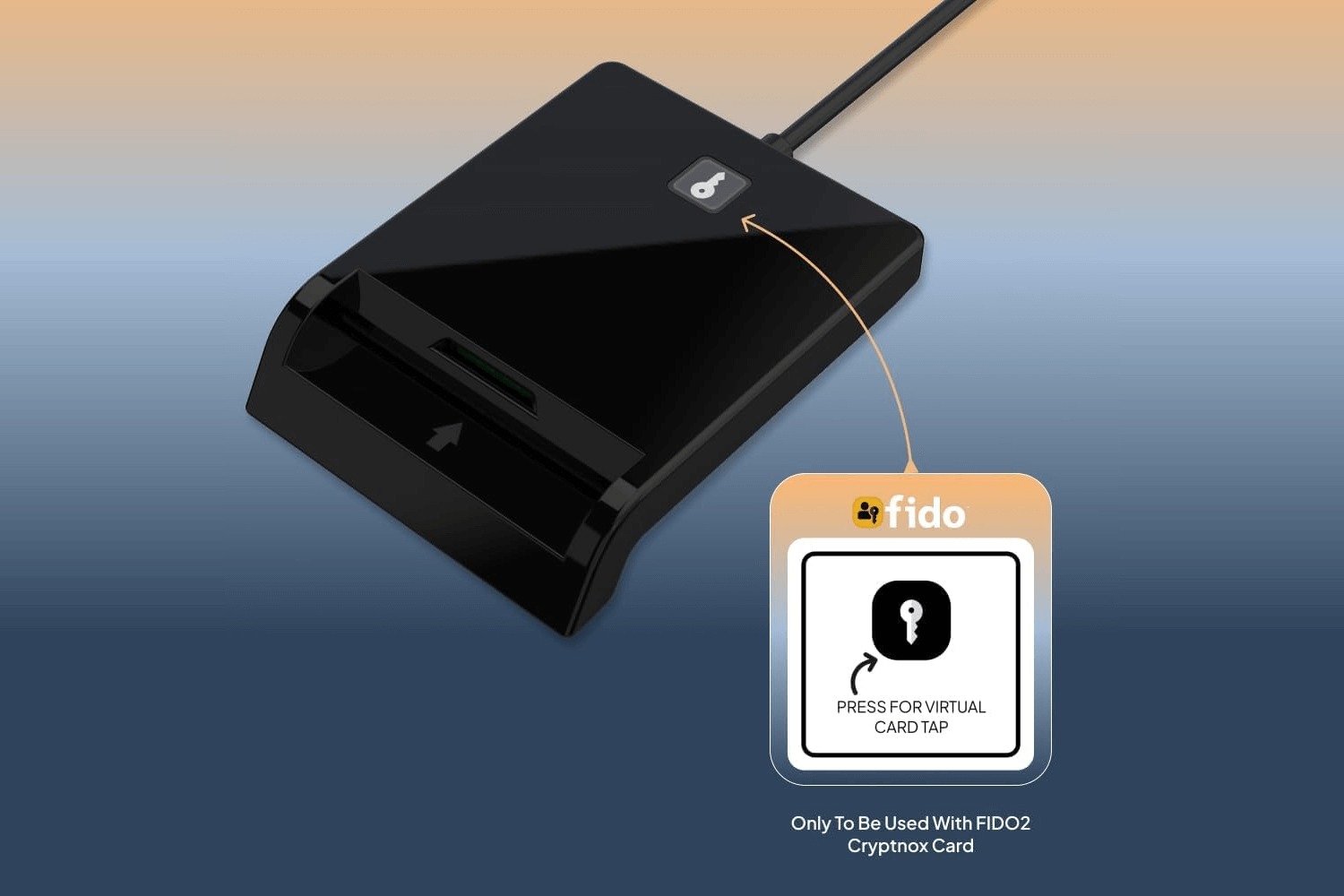
The Cryptnox Contact Smartcard Reader supports full-size smartcards (ID-1) and SIM-sized cards (ID-000), making it ideal for authentication, digital signatures, banking, cryptographic, and SIM management. Fully compliant with ISO/IEC 7816 standards and PC/SC + CCID protocols, it delivers reliable plug-and-play performance for Windows, macOS, and Linux without additional drivers. 

Its compact design, dual-slot capability, and certifications (CE, FCC, RoHS, WHQL) make it perfect for developers, IT administrators, and security-focused users.

card-reader-product-image

Buy it from CRYPTNOX shop directly

Accepts:

payment-we-accept

Preferred shopping solution for US:

Also available on other Amazon shops:
DE, FR, IT, BE, SE, ES, PL, NL, CA, MX, AU

Cryptnox®
Contactless Reader

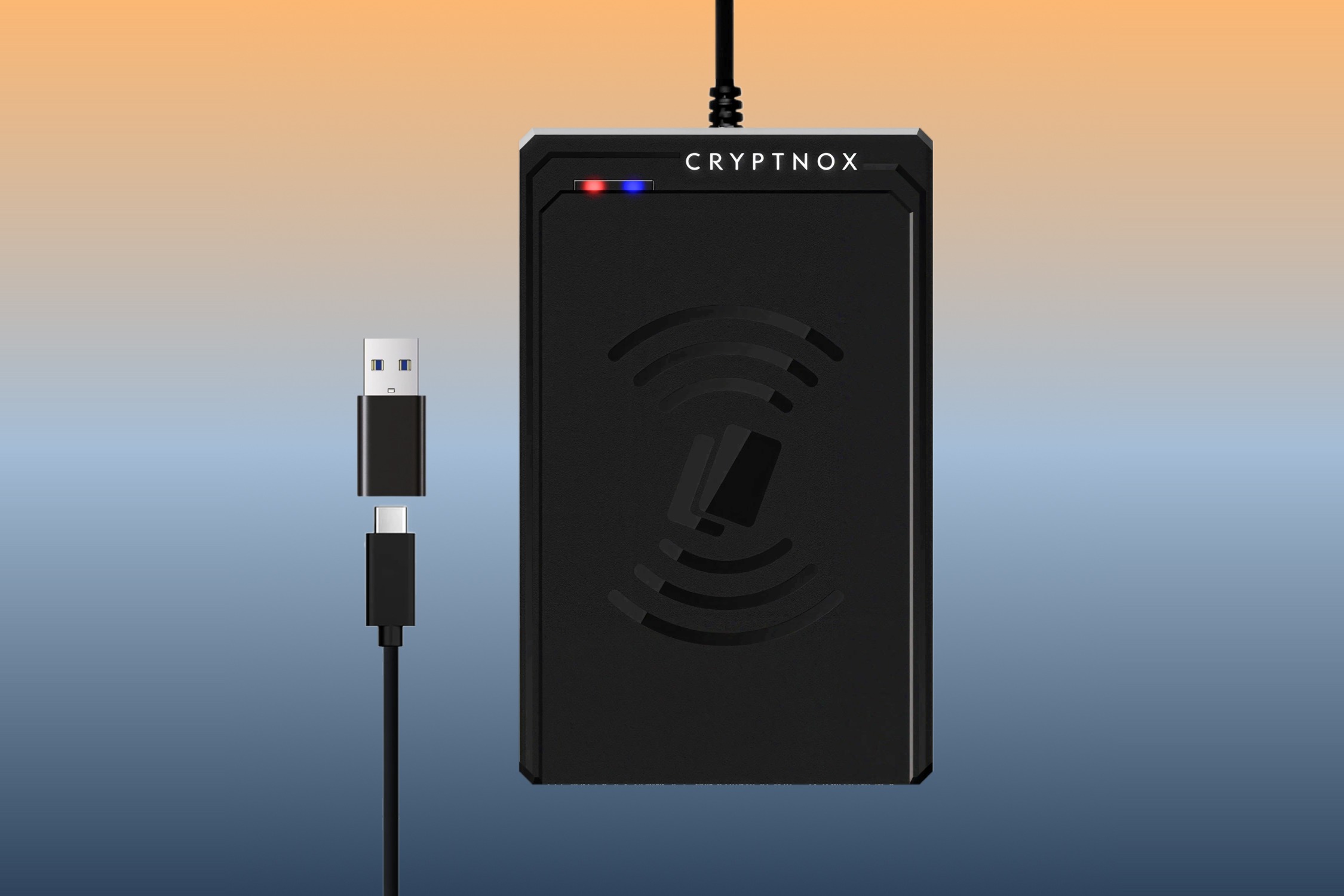
The Cryptnox Contactless Smart Card Reader is an advanced, high-speed reader tailored for businesses and individuals seeking secure, reliable, and efficient authentication solutions.

contactless-card-reader-product-image

Buy it from CRYPTNOX shop directly

Accepts:

Frame 99246035

Preferred shopping solution for US:

Also available on other Amazon shops:
DE, FR, IT, BE, SE, ES, PL, NL, CA, MX, AU

Smartcard readers serve as the bridge between your physical security card and digital systems, enabling secure authentication for banking, cryptocurrency wallets, and enterprise access control These devices communicate with the embedded chip inside your card through either physical contact points or wireless NFC technology The reader initiates a challenge-response mechanism where your card’s chip processes authentication requests using cryptographic keys, generating unique responses that verify your identity without exposing sensitive data

Modern readers support ISO/IEC 7816 standards, which define how cards and readers exchange information across different applications and platforms This standardisation means a single reader can work with banking cards, government IDs, SIM cards, and cryptocurrency hardware wallets that use smartcard form factors Understanding how FIDO2 technology works helps you appreciate why smartcard readers have become essential tools for passwordless authentication systems

Contact readers require you to insert your card into a slot where metal contacts touch corresponding pins to transfer data These readers excel at high-security applications requiring encrypted transactions and large data transfers, making them ideal for digital signatures and cryptographic operations The physical connection provides stable, interference-free communication that’s preferred for sensitive financial transactions and PKI certificate management

Contactless readers use radio frequency identification (RFID) at 13.56 MHz to communicate with cards through embedded antennas You simply wave or tap your card near the reader, which powers up the chip and exchanges information wirelessly This convenience makes contactless readers popular for quick authentication tasks, access control systems, and mobile cryptocurrency transactions Many crypto users appreciate how NFC-enabled readers work seamlessly with smartphone apps for hardware wallet integration
The key difference lies in readability and durability; contact cards expose their chips on the surface while contactless cards protect chips inside the card body, extending their lifespan However, contact readers generally offer more reliable performance for applications requiring consistent data exchange without environmental interference

NFC card readers have revolutionised cryptocurrency security by combining the offline protection of hardware wallets with the convenience of tap-to-authenticate transactions When you use an NFC reader with your crypto wallet card, your private keys remain stored on the secure chip, isolated from internet-connected devices and malware This architecture prevents remote attacks while still allowing you to quickly confirm transactions by tapping your card against the reader

PC/SC and CCID protocol support is essential for crypto applications because these standards enable plug-and-play functionality across Windows, macOS, and Linux without installing proprietary drivers Developers building cryptocurrency applications rely on these protocols to create wallet software that works reliably with any compliant reader If you’re setting up your first hardware wallet, the startup guide walks you through initial configuration with compatible card readers

When selecting an NFC reader for crypto authentication, prioritise these capabilities:

  • Dual-slot design supporting both full-size cards (ID-1) and mini cards (ID-000) for flexibility with different wallet formats
  • Cross-platform compatibility ensures your reader works with desktop and mobile cryptocurrency applications
  • EMV and ISO 7816 compliance for secure transaction signing and multi-factor authentication
  • Compact portability allows you to safely manage crypto assets while travelling

Security-focused users should look for readers with certifications like CE, FCC, RoHS, and WHQL that verify quality manufacturing standards These certifications indicate the reader has passed rigorous testing for electromagnetic compatibility and safety Learning about choosing the right FIDO2 security key complements your reader selection by helping you pair it with cards that maximise your authentication security

The contactless capability is particularly valuable for cryptocurrency users who want to sign transactions using mobile wallets Rather than connecting cables between devices, you tap your wallet card to the reader, confirm the transaction details, and the secure chip signs the transaction offline before relaying it back to your phone This workflow maintains security while providing the user experience crypto adoption needs for mainstream acceptance

FAQs

Yes, NFC card readers work with cryptocurrency hardware wallets that use smartcard form factors and comply with ISO 7816 standards Your private keys stay stored on the secure chip within your wallet card, and the reader simply facilitates communication between the card and your computer or smartphone When you need to sign a transaction, you tap or insert your wallet card into the reader, which powers up the chip to perform cryptographic operations offline This keeps your keys isolated from internet-connected devices where malware could compromise them Make sure your reader supports PC/SC and CCID protocols for compatibility with popular cryptocurrency wallet software

Contact readers require physically inserting your card so metal contacts touch corresponding pins to exchange data, while contactless readers use NFC technology at 13.56 MHz to communicate wirelessly when you tap or wave your card nearby Contact readers provide more stable connections for applications requiring large data transfers or extended cryptographic operations, making them reliable for complex multi-signature transactions Contactless readers offer convenience for quick authentication and transaction signing, especially when paired with mobile crypto wallets, where you can tap your card against your phone Many crypto users prefer dual-purpose readers that support both methods for maximum flexibility across different usage scenarios

Readers that support PC/SC and CCID protocols work as plug-and-play devices on major operating systems without requiring additional driver installation Your computer’s built-in drivers automatically recognize CCID-compliant readers when you connect them via USB, allowing cryptocurrency wallet software to communicate with your hardware wallet card immediately However, you’ll still need to install the specific cryptocurrency wallet application software (like MetaMask hardware support or dedicated wallet apps) to manage your digital assets The hardware wallet startup guide provides detailed instructions for configuring wallet software with your card reader

NFC card readers maintain security by keeping your private keys stored exclusively on the tamper-resistant chip inside your hardware wallet card, never exposing them to your computer or smartphone When you need to sign a transaction, the reader transmits only the transaction data to your card’s chip, which performs the cryptographic signing operation internally and returns only the signed result This means your private keys never leave the secure chip environment, protecting them from malware, keyloggers, and remote attacks The challenge-response authentication mechanism ensures that even if someone intercepts the communication between your reader and card, they cannot extract your keys or forge transactions

NFC card readers paired with wallet cards offer a slimmer, more portable form factor that fits in your regular wallet alongside credit cards, eliminating the need to carry separate USB devices The tap-to-authenticate workflow provides faster transaction signing on mobile devices without cables or adapters, making it convenient for point-of-sale crypto payments or quick transfers Card-based wallets also tend to be more durable since the chip is embedded inside the card body rather than exposed on connectors that can suffer wear from repeated plugging Additionally, NFC readers support both contact and contactless authentication methods, giving you flexibility to use the same hardware across desktop and mobile environments while maintaining the same security level as traditional USB hardware wallets