
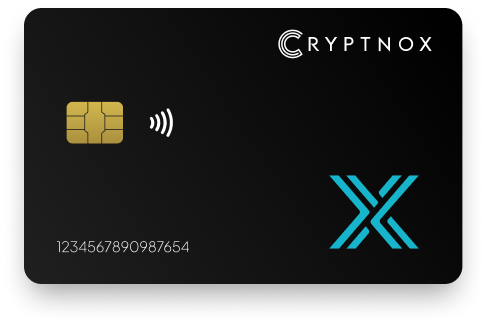
Yes. You can hold IMX with Cryptnox by adding Immutable Chain for native IMX or adding the ERC-20 IMX token on Ethereum; IMX is not pre-programmed on the card. Both routes use a 0x-prefixed 20-byte EVM address. In the Dual-Card Set, the key for that EVM account is created inside secure elements in both cards, so the second card serves as the backup while signing stays card-based.

CRYPTNOX products are also available worldwide through our official Amazon stores.

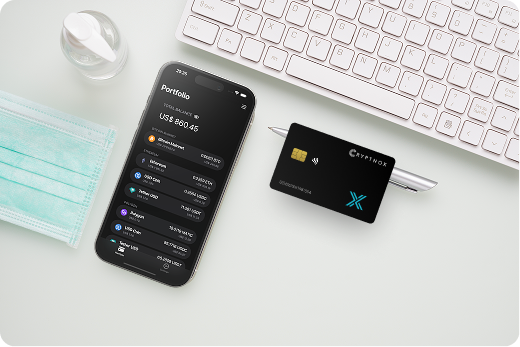
IMX setup on the Cryptnox Crypto Hardware Wallet – Dual-Card Set starts with a route decision. Native IMX is held on Immutable Chain, also known as Immutable zkEVM, by adding that network. ERC-20 IMX is held on Ethereum by adding the IMX token. The card does not arrive with IMX already enabled, so the first practical step is choosing which of those two forms you are going to receive.
Immutable’s native token documentation identifies IMX as the native token for Immutable Chain. That is the route to use when the sender, application, or account view expects native IMX on Immutable zkEVM. The Ethereum route is different because it treats IMX as an ERC-20 token on Ethereum, even though the visible address format is still the familiar 0x-prefixed EVM format.
The same 0x address style can make the two routes look interchangeable, but they are not the same setup choice. Before moving funds, match the asset form shown by the sender with the route you added in the Cryptnox app. The Cryptnox coin and blockchain support page is useful at this point because IMX requires a network-or-token decision instead of a single preloaded asset switch.
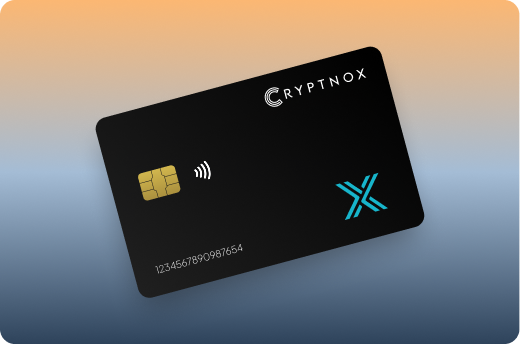
Native IMX belongs to the Immutable Chain route. In the Cryptnox flow, that means you add Immutable Chain through Add a Network before using native IMX. After that network has been added, the IMX account is represented by a 0x-prefixed 20-byte EVM address. The important check is the network label: the address style alone does not prove that you are preparing an Immutable Chain transaction.
This route is the one to choose when the IMX you expect is native IMX on Immutable zkEVM. The card holds and uses the private key for the EVM account, while the selected network determines whether the transaction is prepared for Immutable Chain.
The Cryptnox hardware wallet tutorials are the right companion when you are adding a network or reviewing the app flow. For IMX, the tutorial step that matters most is not simply opening an account; it is adding Immutable Chain once so that native IMX is shown in the correct chain context.
ERC-20 IMX uses the Ethereum token route. Instead of adding Immutable Chain, you add the IMX token on Ethereum through Add a Token. The resulting address is also a 0x-prefixed 20-byte EVM address, which is why the network label must be treated as part of the setup, not as an afterthought.
This distinction matters when IMX is sent from a source that offers more than one network choice. If the source is sending ERC-20 IMX on Ethereum, the Cryptnox app must show the Ethereum token route. If the source is sending native IMX on Immutable Chain, the Ethereum token route is not the same destination context, even if the visible address begins with 0x.
The Cryptnox card signs for the account controlled by its secure element. For a buyer, the practical benefit is clear separation: the card protects the key, while the app setup shows whether you are preparing the Ethereum token version of IMX or the native Immutable Chain version.
Both IMX routes use a 0x-prefixed 20-byte EVM address. That shared format is convenient, but it also means an address check is only one part of the transfer check. For IMX, the full check is asset form, network, and address together: native IMX on Immutable Chain, or ERC-20 IMX on Ethereum.
Do not treat “IMX” as a single label that overrides the selected chain. A transaction prepared for Immutable Chain is not the same route as an ERC-20 token transfer on Ethereum. The Cryptnox card signs what is presented through the selected route, so the route shown before approval should match the IMX form you intended to use.
This is also why asset-specific setup pages matter. If you are setting up other holdings, use the route written for that asset rather than borrowing the IMX rule. For another EVM-style asset page, use the Cryptnox hardware wallet for Polygon guide; for a non-IMX asset page with different receiving assumptions, use the Cryptnox hardware wallet for Bitcoin guide.
For IMX, the private key that controls the 0x-prefixed account is generated inside the secure element and never leaves it. When an Immutable Chain or Ethereum IMX transaction is prepared, the signing step stays with the smart card instead of exporting the key into the phone app or the Web3 connection.
The secure element uses an EAL6+-certified chip. That chip property is relevant to an IMX buyer because both IMX routes depend on the same type of EVM account control: whoever controls the private key controls signing for the account. Cryptnox keeps that key inside the card while the app provides the selected network or token route.
The free Cryptnox app is available on iOS and Android. It connects to Web3 through WalletConnect and works with MetaMask, so an IMX holder can use a Web3 route while the Cryptnox card remains the signing device. The network still needs to be selected correctly: Immutable Chain for native IMX, Ethereum for ERC-20 IMX.
If you are still choosing the hardware wallet category rather than only the IMX route, the Cryptnox crypto hardware wallet collection gives the broader product context for card-based custody before you move to the IMX-specific setup.
The Dual-Card Set ships uninitialised, and the IMX wallet is created during setup. In the default flow, the seed is generated inside both secure elements, so the second smart card is the backup for the same wallet. That matters for IMX because the same 0x-prefixed account can be viewed through the Immutable Chain route or the Ethereum token route after the correct route is added.
There is no recovery phrase to write down by default. The backup is the second card created during the same setup process. Advanced users can import an existing 12- or 24-word BIP39 recovery phrase, but that is not the default Dual-Card Set path. For a new IMX wallet, the default design is card-pair setup rather than phrase-first setup.
The backup card does not remove the need to remember which IMX form you use. If your balance is native IMX, add Immutable Chain in the app view. If your balance is ERC-20 IMX, add the token on Ethereum. The backup preserves access to the key; the app route still determines how the IMX position is displayed and prepared for signing.
You can order the product from the Cryptnox Crypto Hardware Wallet – Dual-Card Set shop page. For an IMX buyer, the key buying point is that the second card is part of the wallet backup model from initialisation, not an extra route that depends on writing down a phrase during standard setup.
The Cryptnox wallet is a contact and NFC smart card. You can tap it to a phone, or insert it into a reader. For IMX, that gives you a card-first signing flow while the app handles the visible route: Immutable Chain for native IMX, or Ethereum plus the IMX token entry for ERC-20 IMX.
Unlock uses the phone’s face or fingerprint function through the Cryptnox app. The card has no face or fingerprint sensor. In an IMX signing flow, that means the phone provides the familiar unlock step, while the card keeps the private key inside the secure element and performs the signing step through the Cryptnox process.
The product is Swiss-engineered for a smart-card wallet experience. Setup still happens after delivery because the set arrives uninitialised. That timing is important for IMX: the buyer adds Immutable Chain or the Ethereum IMX token after initialisation, not before shipment.
Each asset needs its own route. If you also hold RON, use the Cryptnox hardware wallet for Ronin page for that chain instead of applying the Immutable Chain or Ethereum IMX instructions to it.
No. IMX is not pre-programmed on the card. You add native IMX by adding Immutable Chain as a network, or you add ERC-20 IMX by adding the token on Ethereum. Both routes use a 0x-prefixed 20-byte EVM address, so the route selection is part of setup.
Add Immutable Chain when the asset is native IMX on Immutable zkEVM. Add the IMX token on Ethereum when the asset is ERC-20 IMX. The address format is the same 0x-prefixed EVM format in both cases, so the chain choice is the detail that separates the routes.
For an IMX account, the private key is generated inside the card’s secure element and never leaves it. The secure element uses an EAL6+-certified chip. The Cryptnox app can show the IMX route and connect to Web3, but signing stays with the smart card.
The second card in the Dual-Card Set is the backup. The set ships uninitialised, and the seed is generated inside both secure elements during setup. There is no recovery phrase to write down by default, although importing an existing BIP39 recovery phrase is available as an advanced option.
Yes. Cryptnox ships worldwide from the official CRYPTNOX store. Orders to Switzerland, the European Union and the United States are dispatched from stock already held in each of those regions, so the parcel does not cross a customs border into your country and there are no import duties to pay. Orders to other destinations are shipped internationally, and any import duties or local taxes are set by the destination country and are the recipient’s responsibility. Current shipping rates are shown at checkout.
No. The card has no face or fingerprint sensor. Unlock uses the phone’s face or fingerprint function through the Cryptnox app. The card remains the secure-element smart card that holds the private key and signs the IMX transaction for the selected Immutable Chain or Ethereum route.
Yes. The free Cryptnox app on iOS and Android connects to Web3 through WalletConnect and works with MetaMask. For IMX, check the Web3 network before signing: Immutable Chain for native IMX, or Ethereum when you are using the ERC-20 IMX token route.
The IMX routes use a 0x-prefixed 20-byte EVM address. That applies to native IMX on Immutable Chain and ERC-20 IMX on Ethereum. Because the address format is shared, always confirm the network and asset form before receiving IMX or approving a transaction.
No, and on this network that is not a limitation. The Cryptnox wallet uses one address per chain. HD address rotation comes from Bitcoin’s UTXO model and the BIP32/BIP44/BIP49/BIP84 derivation scheme; on account-model networks each account is a single fixed address by design, so the question does not apply in the same way. Cryptnox’s single-address-per-chain behaviour matches how these networks work.
At the cryptography layer the card derives keys along BIP32 and SLIP-10 paths, one path per supported chain, though that is not exposed in the app as multi-address management.