
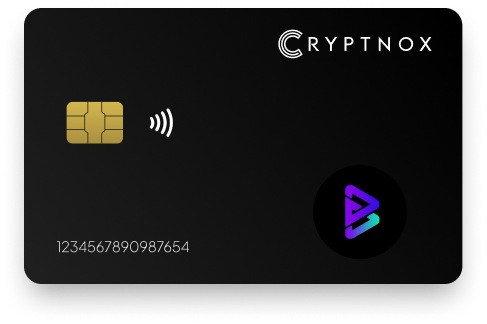
Yes. The Cryptnox Crypto Hardware Wallet – Dual-Card Set can hold native BRISE on Bitgert/Brise Chain after you add that EVM network, and it can hold BRISE token representations such as BEP-20 on BNB Smart Chain or ERC-20 on Ethereum after you add the relevant token. BRISE is not pre-programmed on the card. It uses a 0x-prefixed 20-byte EVM address, with private keys generated inside the secure element and never leaving it.

CRYPTNOX products are also available worldwide through our official Amazon stores.

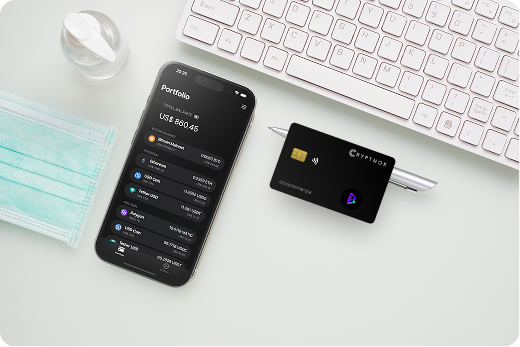
BRISE is added by choosing the route that matches the asset you are receiving. Native BRISE belongs on Bitgert/Brise Chain, an EVM L1 documented by the Bitgert documentation. On Cryptnox, that native route starts with Add a Network, because BRISE is not switched on before setup.
BRISE can also be encountered as an EVM token representation, including BEP-20 on BNB Smart Chain and ERC-20 on Ethereum. Those versions are not added by selecting Bitgert/Brise Chain as the native network; they are added as tokens on the relevant EVM network. The Cryptnox coin and blockchain support page is the place to check supported network routes before you decide which BRISE view to create.
The same 0x-style address format can make the routes look similar, but the wallet view is different for each network. A BRISE balance received on Bitgert/Brise Chain will not be found by looking only at an Ethereum token view, and a BEP-20 representation needs the BNB Smart Chain token route.
The main setup decision for BRISE is not the address shape; it is the network label used by the sender, exchange, or Web3 service. If the service says Bitgert or Brise Chain, create the native Bitgert/Brise Chain route. If it says BEP-20, use BNB Smart Chain. If it says ERC-20, use Ethereum. All three can involve a 0x-prefixed address, so the network name matters.
This is especially important when moving BRISE from a platform that offers more than one withdrawal route. The Cryptnox card protects the private key for the EVM address, but it does not change a Bitgert/Brise Chain transfer into a BNB Smart Chain or Ethereum transfer. The route selected by the sender must match the wallet view you added.
If a balance is not visible after a transfer, the first check is whether the Cryptnox app is showing the same route that was used to send it. BRISE on Bitgert/Brise Chain, BRISE as BEP-20, and BRISE as ERC-20 are separate wallet views even when the address format appears familiar.
When a Cryptnox Dual-Card Set is set up for BRISE, the private key for the 0x-prefixed EVM address is generated inside the secure element. The private key never leaves the secure element, whether you use that address for native BRISE on Bitgert/Brise Chain or for a BRISE token representation on BNB Smart Chain or Ethereum.
The secure element uses an EAL6+-certified chip. For a BRISE holder, the practical result is that the same protected key model applies across the BRISE routes you add: the card signs for the address, while the private key remains inside the card’s secure element.
BRISE is an EVM asset with more than one route. A buyer may add Bitgert/Brise Chain for the native coin, then later add a token representation on another EVM network. The route changes what wallet view you use, but it does not require exporting the private key from the card.
The Cryptnox Crypto Hardware Wallet – Dual-Card Set is the product for this setup. It is sold as two smart cards so the BRISE address can be protected by the secure element while the second card serves as the backup created during setup.
The Dual-Card Set ships uninitialised. During setup, the seed is generated inside both secure elements, so the second card is the backup for the same wallet. For BRISE, that means the backup card is tied to the same EVM address used after you add Bitgert/Brise Chain or after you add a BRISE token representation on another EVM network.
There is no recovery phrase to write down by default. Importing an existing BIP39 recovery phrase is available as an advanced option, but the normal Dual-Card Set setup creates the backup by generating the seed inside both cards. That model is useful for BRISE because the asset can appear in several EVM views, while the backup remains the second card from the same setup.
The backup card does not decide which BRISE route is correct for a transfer. It backs up the wallet created during setup; you still need to add the right network or token view before receiving or using BRISE.
The free Cryptnox app is available on iOS and Android. For BRISE, the app is where you add Bitgert/Brise Chain as a network for native BRISE, or add the BRISE token representation on BNB Smart Chain or Ethereum. The app is also the phone interface for connecting the card and approving actions for the selected route.
Unlocking through the Cryptnox app uses the phone’s face or fingerprint check. The card itself has no fingerprint or face sensor, and the private key still remains inside the secure element. This distinction matters for BRISE because Web3 activity may involve approvals or transfers on different EVM routes, while the signing key remains protected by the card.
Cryptnox connects to Web3 through WalletConnect and works with MetaMask. If a Bitgert or BRISE workflow sends you through a Web3 interface, first confirm whether the request is on Bitgert/Brise Chain, BNB Smart Chain, or Ethereum. Then use the BRISE route already added in the app.
The Cryptnox hardware wallet tutorials are useful before adding BRISE, because the first setup choice is whether you are adding a network or adding a token. For BRISE, that choice determines whether you are looking at the native coin on Bitgert/Brise Chain or a token representation on another EVM network.
BRISE can be native on Bitgert/Brise Chain and can also appear as token representations on BNB Smart Chain and Ethereum. That makes approval and balance checks network-specific. A token approval on Ethereum is not the same view as a BEP-20 approval on BNB Smart Chain, and neither is the same as native BRISE on Bitgert/Brise Chain.
The project-side overview of BRISE describes the asset’s nature, utility, and tokenomics at Bitgert’s BRISE overview. For wallet setup, the operational point is narrower: select the route that matches the service you are using, then let the Cryptnox card protect the private key for the 0x-prefixed address.
These checks are not about changing the address format. They are about preventing a native Bitgert/Brise Chain action from being confused with a BNB Smart Chain or Ethereum token action.
BRISE belongs in the group of assets where the buyer must pay attention to the network route behind a 0x-prefixed address. If you also use Polygon assets, the Polygon hardware wallet page covers a separate EVM network route rather than the Bitgert/Brise Chain route used for native BRISE. If you also use Ronin, the Ronin hardware wallet page covers another EVM-style route that should not be treated as a BRISE destination.
For a non-EVM contrast, the Bitcoin hardware wallet page describes an asset route that is not based on the same 0x-prefixed EVM address format. That contrast helps explain why BRISE setup is about selecting Bitgert/Brise Chain, BNB Smart Chain, or Ethereum before receiving funds.
The broader Cryptnox crypto hardware wallet hub gives the product context for buyers comparing card-based hardware wallet options across assets. For BRISE specifically, the decisive details are the native Bitgert/Brise Chain route, the BEP-20 and ERC-20 token routes, and the 0x-prefixed EVM address format.
Choose the Cryptnox Crypto Hardware Wallet – Dual-Card Set for BRISE if you want a smart-card hardware wallet where native BRISE is added through Bitgert/Brise Chain and token representations are added on their relevant EVM networks. The cards are Swiss-engineered, and the format is a contact and NFC smart card: tap to a phone or insert into a reader.
The BRISE buying checklist is short. You need the Bitgert/Brise Chain route for native BRISE, the ability to add BEP-20 or ERC-20 token views when those are the versions you receive, and a backup that is created as the second card during setup. The private keys are generated inside the secure element and never leave it.
You can buy the card pair from the Cryptnox shop product page. Before sending BRISE to the wallet, add the correct route and confirm that the sender’s network label matches the wallet view you created.
No. BRISE is not pre-programmed on the card. Add Bitgert/Brise Chain once if you want native BRISE. If you are receiving a BEP-20 or ERC-20 BRISE representation, use the relevant EVM network and add the BRISE token there before relying on the wallet view.
Use Bitgert/Brise Chain when the sender or service identifies the asset as native BRISE. Use BNB Smart Chain for a BEP-20 representation and Ethereum for an ERC-20 representation. The address can still be 0x-prefixed, so the network label is the important setup detail.
BRISE uses a 0x-prefixed 20-byte EVM address format on the routes covered here. That applies to native BRISE on Bitgert/Brise Chain and to token representations on BNB Smart Chain or Ethereum. The similar address format does not make the network views interchangeable.
The Dual-Card Set ships uninitialised. During setup, the seed is generated inside both secure elements, so the second card is the backup for the same wallet. There is no recovery phrase to write down by default, while importing an existing BIP39 recovery phrase remains an advanced option.
Yes. The free Cryptnox app connects to Web3 through WalletConnect and works with MetaMask. For BRISE, first add Bitgert/Brise Chain for the native coin or add the BRISE token representation on BNB Smart Chain or Ethereum, depending on the service you are using.
No. The card itself has no fingerprint or face sensor. Unlocking through the Cryptnox app uses the phone’s local face or fingerprint check, while the private key for the BRISE address is generated inside the card’s secure element and never leaves it.
The same 0x-prefixed EVM address format can appear across Bitgert/Brise Chain, BNB Smart Chain, and Ethereum. Balances still depend on the network view you add. Native BRISE is viewed through Bitgert/Brise Chain, while BEP-20 and ERC-20 representations are token views on their own networks.
No, and on this network that is not a limitation. The Cryptnox wallet uses one address per chain. HD address rotation comes from Bitcoin’s UTXO model and the BIP32/BIP44/BIP49/BIP84 derivation scheme; on account-model networks each account is a single fixed address by design, so the question does not apply in the same way. Cryptnox’s single-address-per-chain behaviour matches how these networks work.
At the cryptography layer the card derives keys along BIP32 and SLIP-10 paths, one path per supported chain, though that is not exposed in the app as multi-address management.