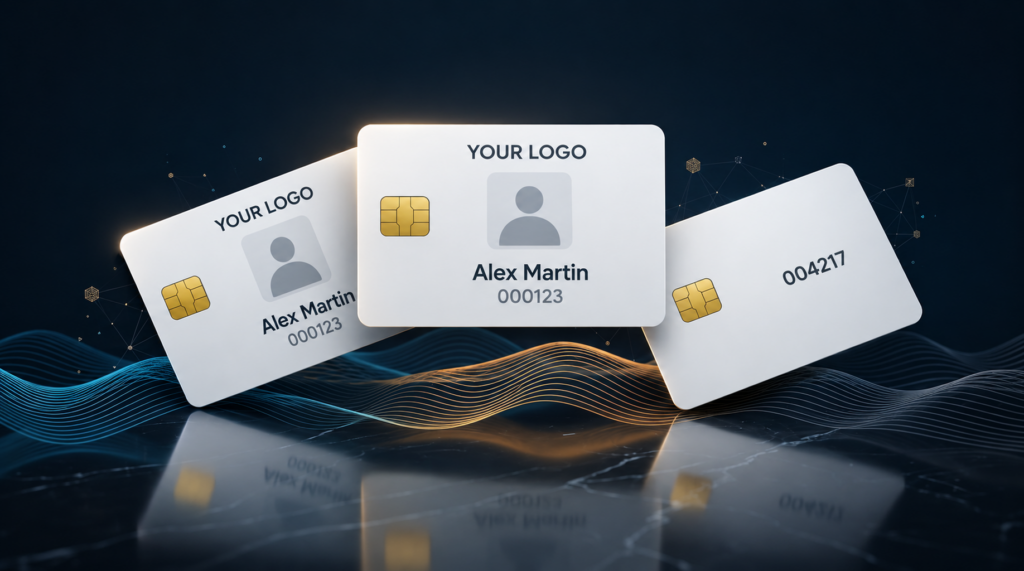
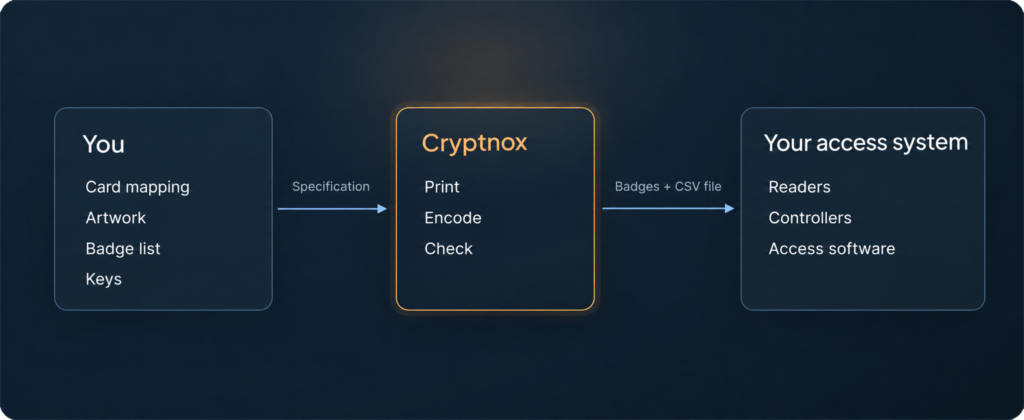
Cryptnox turns white PVC MIFARE DESFire EV3 16K smart cards into finished access badges for your organization. We print your design, encode each badge with your DESFire application and keys, and deliver the series with the data file your access system needs. Your team imports the file and hands the badges out.
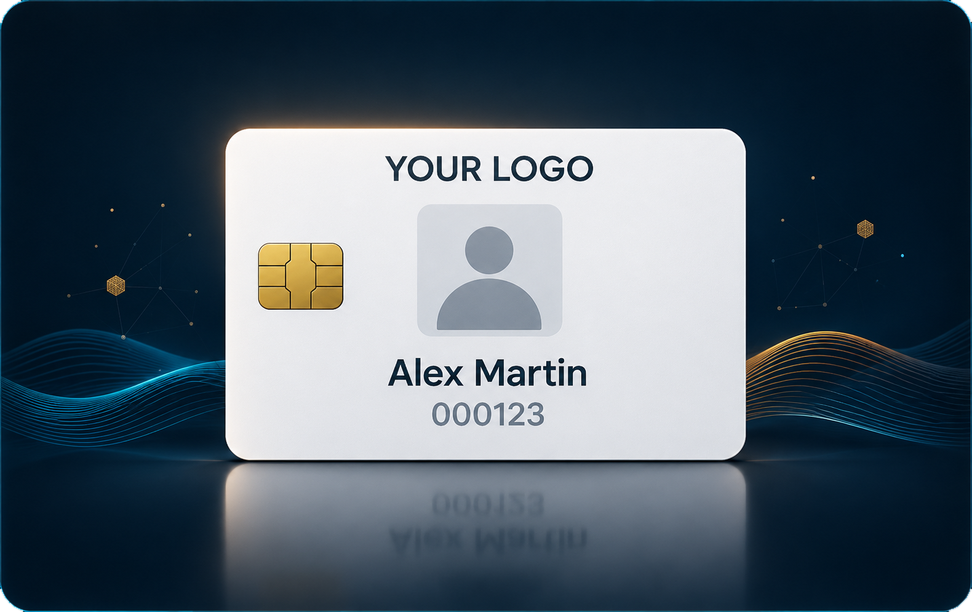
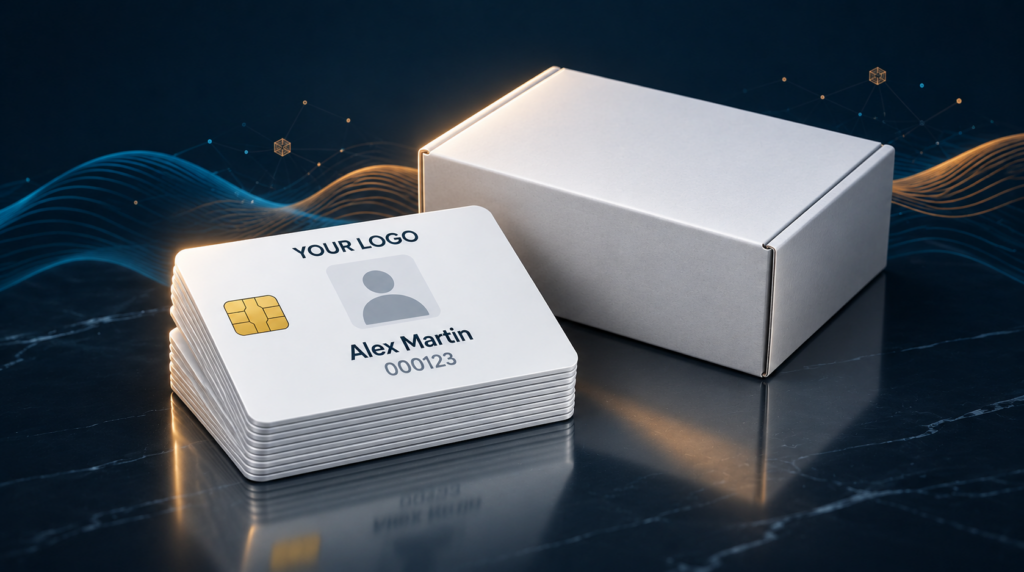
Logo, colours and layout printed in colour on both sides of the white PVC card. Names, photos and numbers are printed badge by badge.
Encoded Badge by Badge
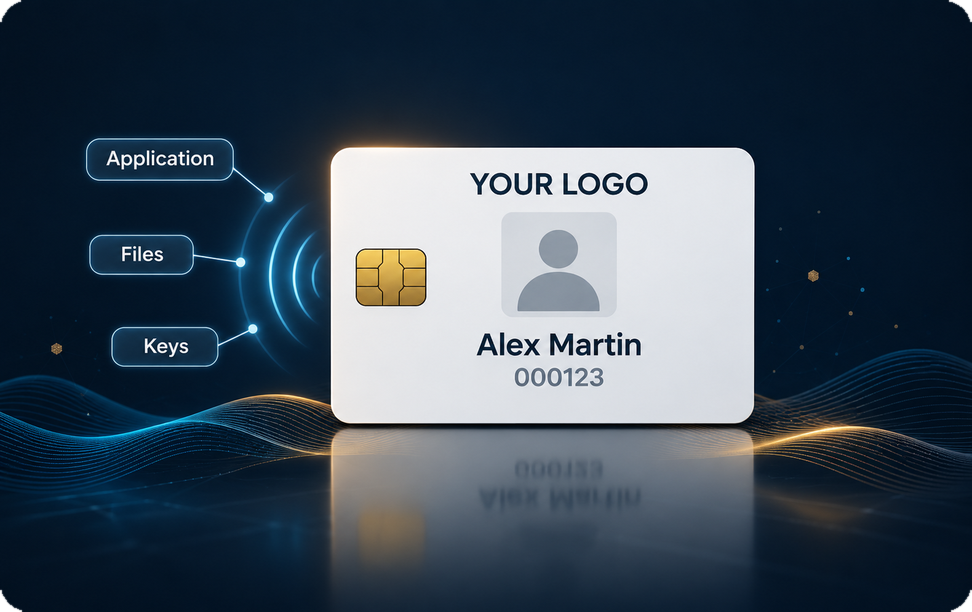
Your DESFire application, files and keys written to every badge, with a key derived for each card where your system requires it.
Data Files Included
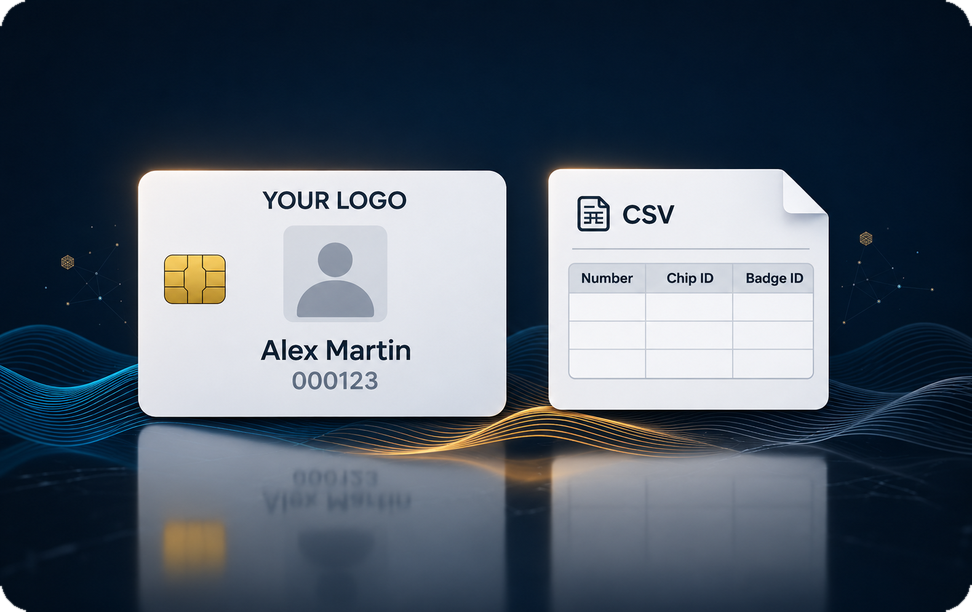
Every delivery comes with a CSV file that links each printed number to its badge, ready to import into your access system.
Cards in Stock
We hold white PVC cards in stock at all times, so your order starts from cards on the shelf, not from a production run.
Three Layers of Personalization
Printed
Your artwork on the card face. A company badge can carry a logo, a name and a photo. A high-security site may prefer a neutral badge that shows only a number. We produce both.
Encoded
We create your application on the chip, write the files and the badge identifier, and replace the factory keys with yours. Where your system requires it, every badge gets its own key, derived from your master key.
Documented
A CSV file lists every badge in the series: the printed number, the chip identifier and the identifier written to the badge.
From Your Specification to Badges on Desks
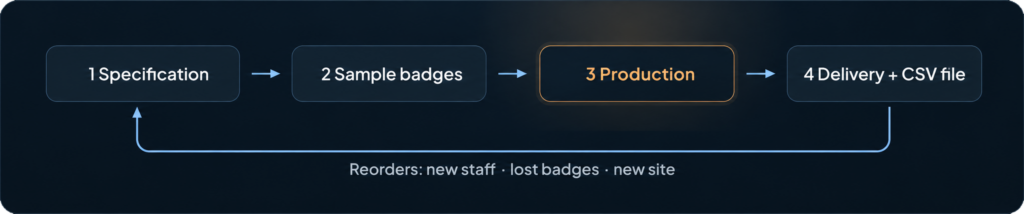
1. Specification
You send the card mapping of your access system, your artwork and the list of badges to produce. Keys are transferred through a secure key exchange, with key derivation (KDF) where required. Badges can also be delivered with default keys.
2. Sample Badges
We produce sample badges first. You test them on your own readers and in your access software before the series is made.
3. Production and Delivery
We print and encode the series, check sample badges from it, and ship it with the CSV file. Reorders for new staff, lost badges or a new site follow the same specification.
Built Around Your Access Infrastructure
A DESFire badge is only useful if your readers accept it. We encode to the specification of the system you already run: the application identifier, the file layout, the key set and the identifier format your controllers expect. You stay the owner of the keys and of the system. We supply the badges.
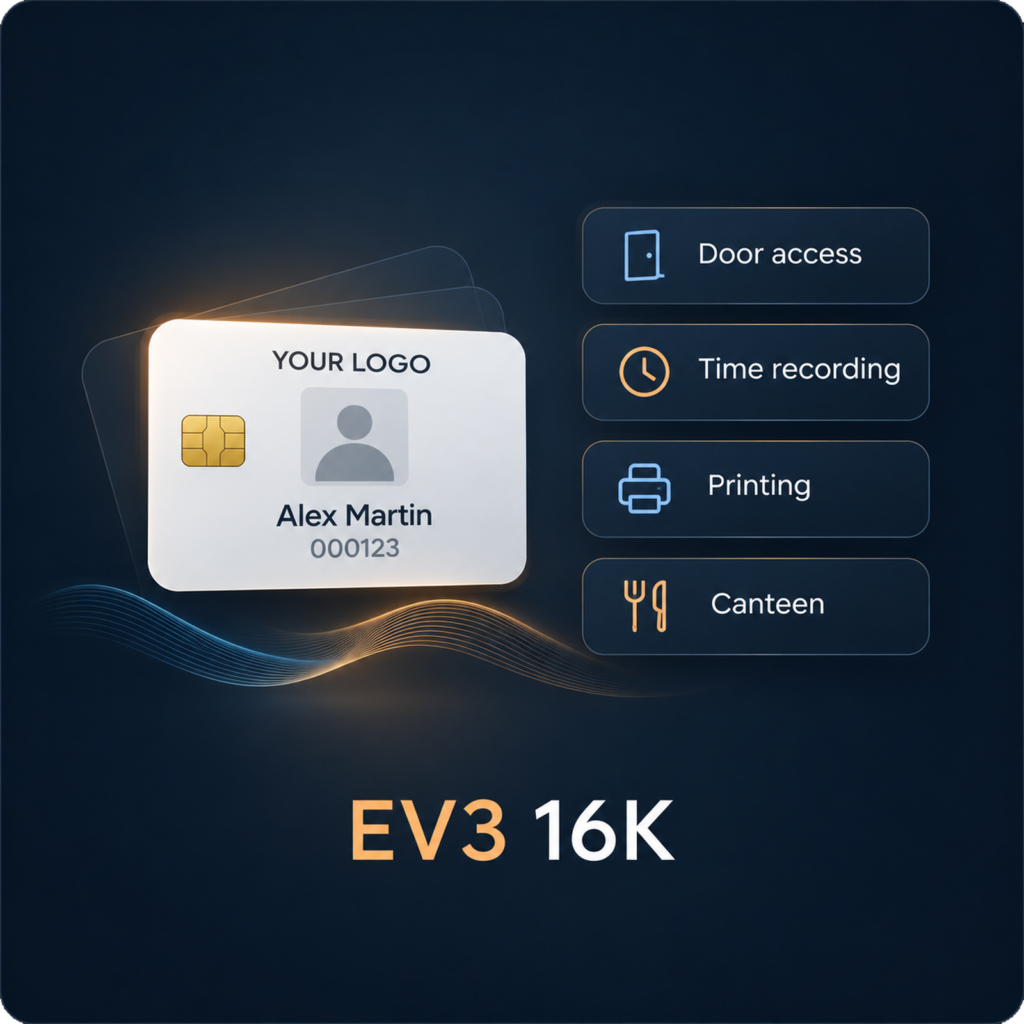
Door access is the usual start. One DESFire badge can also hold separate applications for time recording, secure printing, canteen payment or lockers, each with its own keys.
Badges for Synchronic XSecur’-Evo Installations
Synchronic’s XSecur’-Evo access control reads a private identifier stored in the customer’s own DESFire application and protected by an AES-128 key diversified for each badge. The system is designed for badges encoded either on site or by an outside provider. We encode badges to the Synchronic mapping with your keys and deliver them with the CSV file that links each badge to its number.
Other Systems That Use Your Own Keys
The same service applies to access platforms designed around customer-owned DESFire keys, for example Genetec Security Center, LEAF Enterprise credentials, Allegion (Schlage) custom-key credentials, KentixONE, and readers from STid and Baltech. For these we encode on request, to the mapping your integrator provides, and validate sample badges on your readers before production. Systems that only accept credentials issued by their own manufacturer cannot be served this way. Tell us what you run and we will say so plainly.
Product and company names belong to their respective owners. Cryptnox is not affiliated with these companies.
One Card. Up to Three Security Technologies.
MIFARE DESFire EV3 16K
The badge is a white PVC card with MIFARE DESFire EV3 and 16 KB of memory, enough for several applications on one badge. It runs as an NXP MIFARE DESFire implementation on a secure-element chip, with AES-128 and up to 28 applications per card. The details are in the MIFARE DESFire product specification.
FIDO2 on the Same Badge
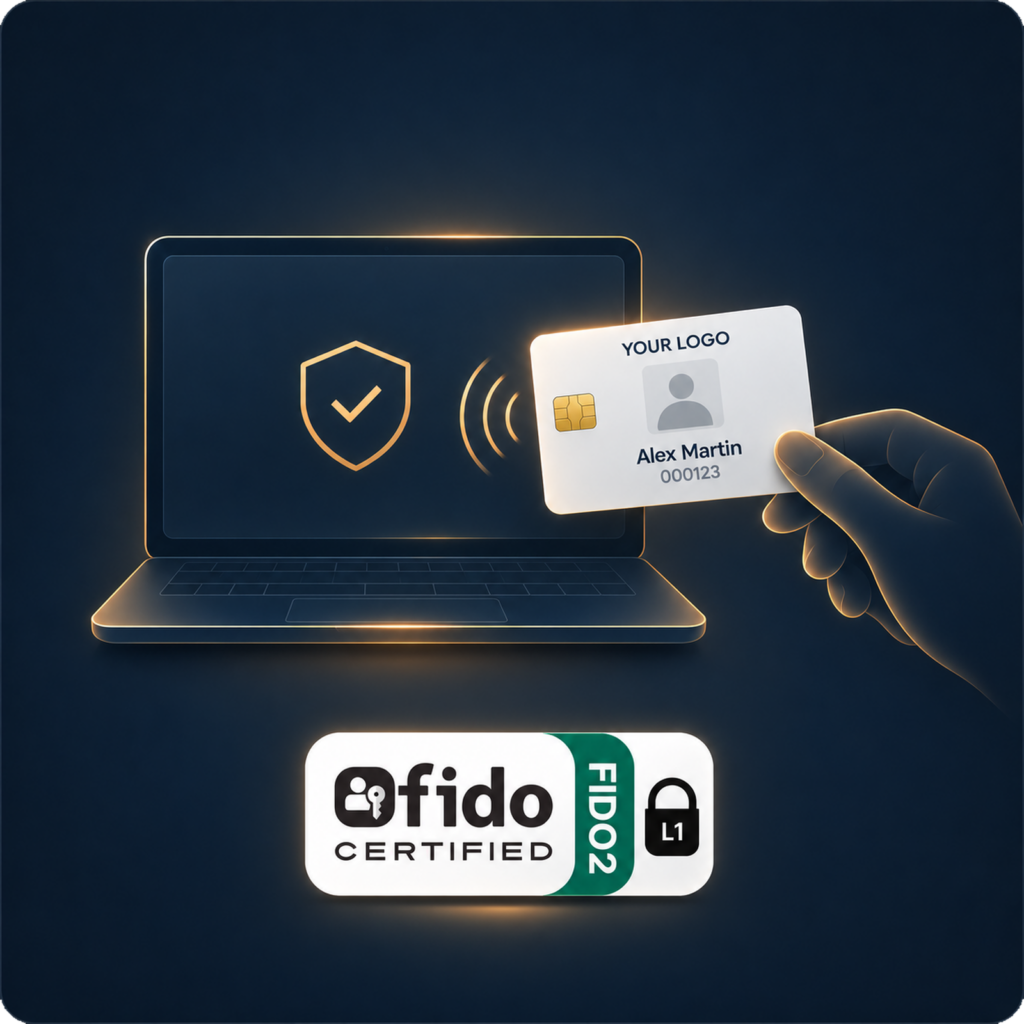
The badge that opens the door can also protect sign-in. With the FIDO2 applet, the same card is a phishing-resistant second factor on services that support FIDO2 security keys. Your IT team registers each card to its user as usual.
PIV on the Same Badge
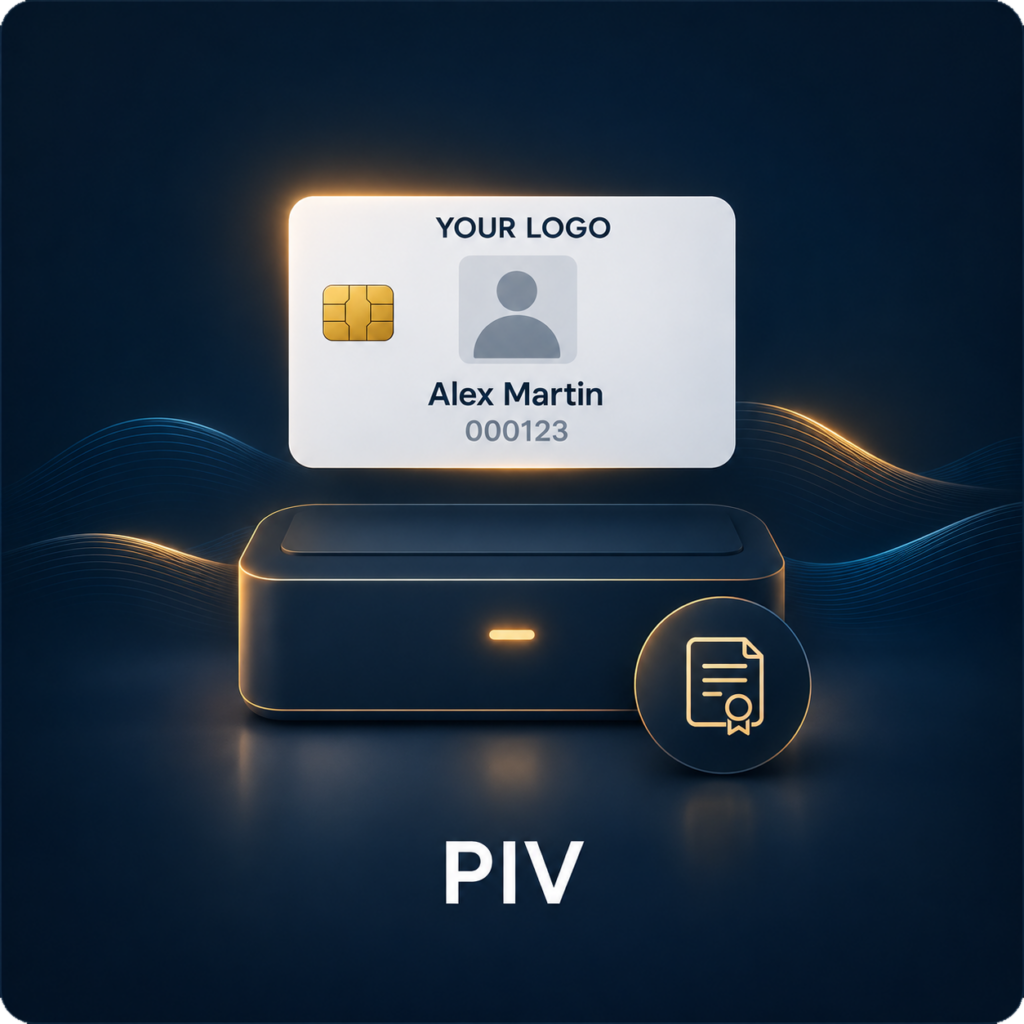
Add the PIV applet, implementing NIST SP 800-73-4, for certificate-based smart-card logon and digital signatures over the card’s contact interface. The applet is delivered blank. Your PKI team loads keys and certificates with the free Cryptnox ID CLI.
Your Keys, Your Data
Access keys and badge lists are the most sensitive part of a badge project, and they remain yours. How they are transferred, where they are held during production and what happens to them after delivery is agreed with you before the project starts.
FAQ
Frequently Asked Questions
Is there a minimum order quantity?
We handle small series as well as full site rollouts. Tell us how many badges you need and we quote for that quantity.
What do you need from us?
The card mapping of your access system (application identifier, file layout, key numbers), your artwork, the list of badges to produce, and your keys if we encode with them. If your integrator holds this information, we work with them directly.
Who holds the keys?
The keys stay yours. They reach us through a secure key exchange, with key derivation (KDF) where required, or we deliver the badges with default keys. How keys are held during production and what happens to them after delivery is agreed with you before the project starts.
Will the badges work with my access system?
Every system reads a DESFire badge in its own way, so we do not ship a series untested. We encode sample badges to your specification and you validate them on your readers first. Some readers identify a card by its chip type before they read the application, and the samples show that before any series is made. Systems that only accept credentials issued by their own manufacturer cannot be served.
Can the same badge be used for computer sign-in?
Yes. The same card can also carry a FIDO2 applet, used as a phishing-resistant second factor on services that support FIDO2 security keys, and a PIV applet implementing NIST SP 800-73-4 for certificate-based smart-card logon over the contact interface. Your IT team registers the FIDO2 key and loads the PIV certificates.
Can we order replacement badges later?
Yes. Replacements and badges for new staff follow the same specification as your first series, in the quantity you need.
Send Us Your Badge Specification
Tell us which access system you run, how many badges you need and what should be printed on them. We reply with a quote and a plan for the sample badges.