
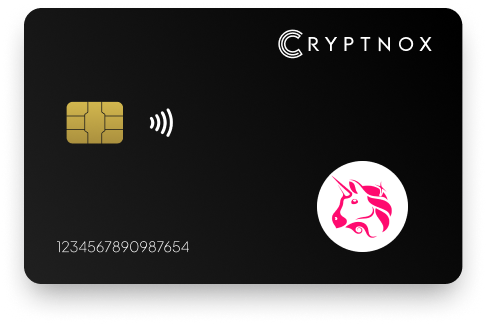
Yes. The Cryptnox Crypto Hardware Wallet – Dual-Card Set can hold Uniswap (UNI) as an ERC-20 token on Ethereum mainnet after you add UNI once in the Cryptnox app. UNI is not pre-programmed on the card. It uses an Ethereum 0x-prefixed 20-byte EVM address. The private key for that Ethereum account is generated inside the secure element and never leaves it, while the free Cryptnox app connects to Web3 through WalletConnect and works with MetaMask.

CRYPTNOX products are also available worldwide through our official Amazon stores.

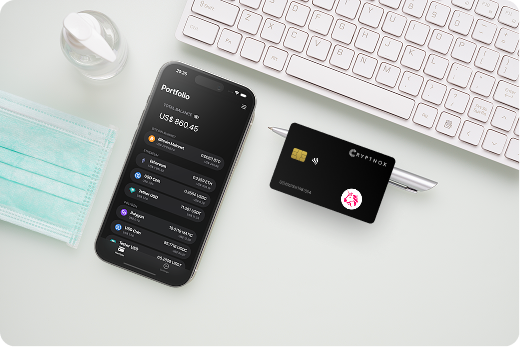
Uniswap (UNI) is supported on Cryptnox as the UNI ERC-20 token on Ethereum mainnet. The Dual-Card Set does not arrive with UNI pre-programmed, so a buyer adds UNI once through the Cryptnox app by using Add a Token, or Add a Network first when that route is needed in the app.
Uniswap’s developer documentation describes UNI as the Uniswap governance token, and Uniswap’s UNI announcement explains UNI’s governance role. On a Cryptnox card, the important wallet detail is the token route: UNI is handled through Ethereum, not through a separate UNI-only chain.
The 0x address shown for the Ethereum account is the address used for UNI in this support route. That address format is the same EVM address format used for Ethereum accounts, which is why UNI setup should be treated as an Ethereum token setup rather than as a standalone blockchain setup.
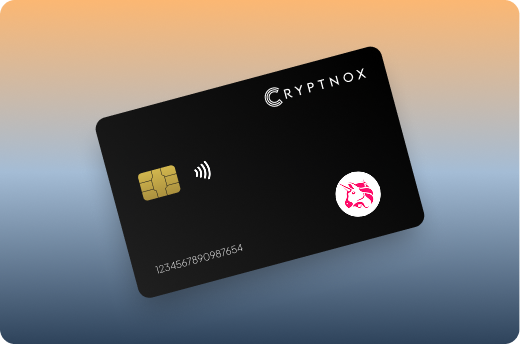
The Cryptnox Crypto Hardware Wallet – Dual-Card Set ships uninitialised. During setup, the wallet is created on the cards first; UNI is added afterward as an ERC-20 token on Ethereum. This order matters because the card pair creates the Ethereum account key before the app displays UNI against that account.
The Cryptnox hardware wallet tutorials are the setup resource for Cryptnox products when you need step-by-step app guidance. The Cryptnox coin and blockchain support page is the reference point for supported assets and network coverage before you add a new token such as UNI.
Because UNI is not pre-programmed, seeing no UNI entry before the token is added does not mean the card cannot hold UNI. The support route is user-added UNI on Ethereum mainnet, using the Cryptnox app to add the token view for the Ethereum account controlled by the card.
UNI on Cryptnox uses an Ethereum account address in 0x-prefixed 20-byte EVM format. A UNI holder should therefore check the network and the address format together: the supported route here is UNI as an ERC-20 token on Ethereum mainnet, received to the Ethereum address shown in the Cryptnox app.
The address detail is not cosmetic. UNI is not held through a separate Uniswap address format in this setup, and it is not a native coin with its own card account type. It is a token associated with an Ethereum account. The private key for that Ethereum account is generated inside the secure element and never leaves it.
If you also use assets on other networks, keep the page context separate. The Polygon hardware wallet page covers a different network page, while this UNI page is specifically for the ERC-20 token on Ethereum mainnet. For a wider view of Cryptnox asset pages, the Cryptnox hardware wallet collection groups the product pages by buyer use case.
The Cryptnox smart card protects the Ethereum account key that controls UNI. Private keys are generated inside the secure element and never leave it. For UNI, that means the key for the 0x Ethereum address holding the ERC-20 token is created inside the card rather than being exported into the phone app.
The secure element uses an EAL6+-certified chip. The finished product is the Cryptnox Crypto Hardware Wallet – Dual-Card Set; the certification statement belongs to the chip, not to the finished card. The buyer-facing result is a wallet flow where the app provides the UNI interface and the card remains the signing component for the Ethereum account.
The official product page for the Cryptnox Crypto Hardware Wallet – Dual-Card Set is the purchase page for the dual-card product described here.
The Dual-Card Set uses two cards because the second card is the backup. The set ships uninitialised, and during the default setup the seed is generated inside both secure elements. After that setup, the second card preserves access to the same wallet that controls the Ethereum address used for UNI.
There is no recovery phrase to write down by default. Importing an existing BIP39 recovery phrase is available as an advanced option, but the default buyer flow for a new Dual-Card Set is to create the wallet inside both secure elements during initialization.
For UNI holders, the backup is tied to the Ethereum account rather than to a separate UNI-only account. If the account controls UNI on Ethereum mainnet, the backup card is backing up access to that same Ethereum account.
The free Cryptnox app is available on iOS and Android. For UNI, the app is where the Ethereum account is managed, where UNI is added as an ERC-20 token, and where Web3 access is started through WalletConnect. Cryptnox also works with MetaMask, which matters for UNI buyers who use Ethereum application flows that expect a MetaMask-style wallet connection.
Unlock is handled through the phone’s fingerprint or face unlock in the Cryptnox app. The card itself has no fingerprint or face sensor. The UNI-related signing authority remains with the card because the private key for the Ethereum account is generated inside the secure element and never leaves it.
This setup keeps the UNI token route clear: the app presents Ethereum account and token information, WalletConnect provides a Web3 connection path, MetaMask workflows are available, and the secure element keeps the private key inside the card.
The Cryptnox card is a contact and NFC smart card. For UNI management, that means you can tap the card to a phone when using the mobile app, or insert the card into a reader when using the contact interface. The product is dual-interface, so it is not limited to a single contactless method.
This form factor matters when UNI is managed as an Ethereum ERC-20 token through the app. The phone can show the Ethereum account, the UNI token entry, WalletConnect activity, and transaction details. The card remains the signing component for the Ethereum account whose private key was generated inside the secure element.
The cards are Swiss-engineered. The buyer receives a Dual-Card Set that is uninitialised, sets up the wallet in the Cryptnox app, and then adds UNI after the account exists. The card’s job is not to ship with UNI already enabled; its job is to protect the private key for the Ethereum account that can hold UNI once the token is added.
UNI should be evaluated as an Ethereum ERC-20 token on Cryptnox. If you are buying a wallet for multiple assets, compare each asset by its own chain and setup route rather than assuming every token uses the same address model. The UNI route on this page is Ethereum mainnet with a 0x-prefixed 20-byte EVM address.
The Tron hardware wallet page and the Bitcoin hardware wallet page are separate Cryptnox asset pages for buyers checking non-UNI wallet needs. The Ronin hardware wallet page is another asset-specific page for buyers comparing supported routes across holdings.
For UNI, the purchase decision is simpler than a multi-chain comparison: use the Cryptnox Dual-Card Set, initialize the two cards, add UNI as an ERC-20 token on Ethereum, and use the Ethereum 0x address shown in the app.
No. UNI is not pre-programmed on the Cryptnox card. The Dual-Card Set ships uninitialised, and the buyer sets up the wallet first. After initialization, UNI is added once in the Cryptnox app as an ERC-20 token on Ethereum mainnet, using Add a Token or the relevant network-add route when needed.
Cryptnox supports UNI as an ERC-20 token on Ethereum mainnet. The address format is a 0x-prefixed 20-byte EVM address. When adding or receiving UNI, use the Ethereum account address shown in the Cryptnox app for this UNI support route.
The private key for the Ethereum account that can hold UNI is generated inside the secure element and never leaves it. The secure element uses an EAL6+-certified chip. The app is used to add UNI and review activity, while the card remains the signing component for that Ethereum account.
During the default setup, the seed is generated inside both secure elements in the Dual-Card Set. The second card is therefore the backup for the same wallet that controls the Ethereum address used for UNI. No recovery phrase is written down by default; importing an existing BIP39 recovery phrase is an advanced option.
Yes. The free Cryptnox app on iOS and Android connects to Web3 through WalletConnect and works with MetaMask. UNI remains an ERC-20 token on Ethereum, so the account and token route should be treated as Ethereum mainnet activity when using those connection flows.
No. The card itself has no fingerprint or face sensor. Unlock is handled through the phone’s fingerprint or face unlock in the Cryptnox app. The card remains the hardware signing component, and the private key for the Ethereum account holding UNI stays inside the secure element.
The Cryptnox card is a contact and NFC smart card. You can tap it to a phone when using the mobile app, or insert it into a reader through the contact interface. This dual-interface card is used with the app while UNI is managed as an ERC-20 token on Ethereum.
No, and on this network that is not a limitation. The Cryptnox wallet uses one address per chain. HD address rotation comes from Bitcoin’s UTXO model and the BIP32/BIP44/BIP49/BIP84 derivation scheme; on account-model networks each account is a single fixed address by design, so the question does not apply in the same way. Cryptnox’s single-address-per-chain behaviour matches how these networks work.
At the cryptography layer the card derives keys along BIP32 and SLIP-10 paths, one path per supported chain, though that is not exposed in the app as multi-address management.