
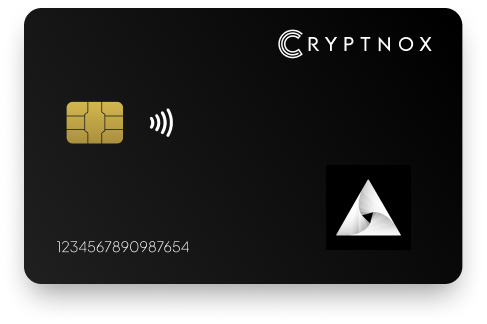
Yes. Cryptnox supports API3 as an ERC-20 token on Ethereum after you add API3 once in the Cryptnox app through Add a Token, or Add a Network if that route is needed first. API3 is not pre-programmed on the card. Use contract 0x0b38210ea11411557c13457D4dA7dC6ea731B88a and an 0x-prefixed 20-byte EVM address. The Dual-Card Set creates private keys inside the secure element, and the keys never leave it.

CRYPTNOX products are also available worldwide through our official Amazon stores.

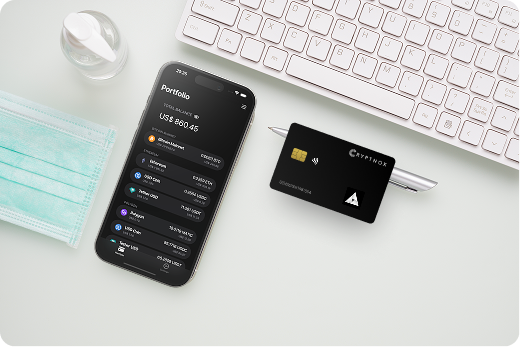
API3 is held with Cryptnox through its Ethereum ERC-20 token route. It is not set up as a separate API3-native account, and it is not pre-programmed on the Cryptnox Crypto Hardware Wallet – Dual-Card Set when the cards arrive.
The buyer workflow is specific: initialise the Dual-Card Set, open the free Cryptnox app on iOS or Android, choose the Ethereum context, and add API3 as an ERC-20 token. If the app route requires a network step first, use Add a Network before Add a Token. The API3 contract to enter is 0x0b38210ea11411557c13457D4dA7dC6ea731B88a.
The receiving address for API3 on this route is an 0x-prefixed 20-byte EVM address. That address belongs to the Ethereum account controlled by the Cryptnox card. The API3 token entry tells the app which Ethereum token to show for that address; it does not create a different address format for API3.
For a broader asset check before buying, review the Cryptnox coin and blockchain support page and keep API3 classified as Ethereum ERC-20 when comparing it with assets that use other routes.
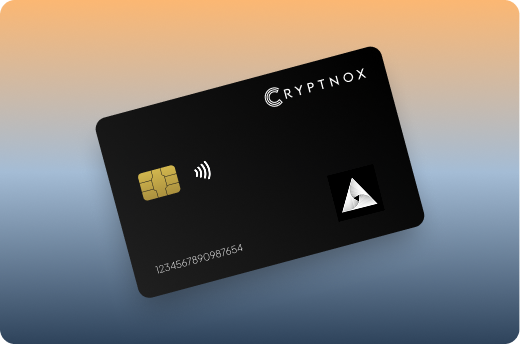
The API3 entry should be created from its Ethereum token details. The core fields are the chain, token standard, contract, and address format. If those fields do not line up, the displayed token route is not the API3 route described here.
The API3 contract can be checked on Etherscan’s API3 token page before you rely on the token entry. That check is useful because the contract is the identifier for the ERC-20 token you intend to hold.
If you are also researching API3 as a project, the API3 technical documentation is the project-side place to review its technical material. For wallet setup, keep the Cryptnox entry focused on Ethereum, ERC-20, the API3 contract, and the 0x EVM address format.
For API3, the product to buy is the Cryptnox Crypto Hardware Wallet – Dual-Card Set. The set is delivered uninitialised, so the Ethereum wallet that can hold API3 is created during your own setup rather than arriving as a pre-created account.
During initialisation, the wallet seed is generated inside both secure elements. The second card is therefore the backup for the same Ethereum wallet that can hold API3. For a buyer planning to hold API3, the important point is that the backup is another card from the same setup, not a separate API3 token account.
API3 still has to be added in the app after the card setup is ready. The backup card is tied to the underlying wallet seed; it is not a second copy of the API3 app display setting. If the API3 token entry needs to be added again in the app view later, the route remains Ethereum ERC-20 and the contract remains 0x0b38210ea11411557c13457D4dA7dC6ea731B88a.
Importing a BIP39 recovery phrase is an advanced option. A new Dual-Card Set setup for API3 does not require that import path by default. The practical purchase flow is to initialise the two cards, store the backup card separately, and add API3 as the Ethereum ERC-20 token you plan to hold.
When API3 is held through Cryptnox, the sensitive item is the private key for the Ethereum address that can hold API3. That private key is generated inside the secure element and never leaves it. The app can show the API3 token entry, but the key material for the 0x address stays inside the card.
The card uses an EAL6+-certified chip. For an API3 holder, that means the Ethereum address used for the API3 ERC-20 entry is controlled by hardware-held key material rather than by a software-only phone wallet.
Unlocking for an API3 action uses the phone’s face or fingerprint unlock through the Cryptnox app. The card has no face or fingerprint sensor; the phone provides that unlock step while the card remains the place where the Ethereum private key is kept.
The Cryptnox product is a contact and NFC smart card. For an API3 workflow, you can tap the card to a phone or insert it into a reader when the wallet flow calls for card interaction. The physical interface does not change the asset route: API3 remains an Ethereum ERC-20 token with a 0x EVM address.
The free Cryptnox app on iOS and Android is where the API3 route is added. API3 should appear only after you add the token or complete the needed network step first. Because API3 is not pre-programmed on the card, the first API3-specific task is to confirm the Ethereum token details before using the displayed address for that asset.
Cryptnox connects to Web3 through WalletConnect and works with MetaMask. For API3, that means the same Cryptnox-controlled Ethereum address can be used through those connection routes while API3 remains an ERC-20 token on Ethereum. The connection route does not change the API3 contract, token standard, or 0x-prefixed EVM address format.
If you want a guided product flow before adding API3, use the Cryptnox hardware wallet tutorials to review card setup and app use. After that, the API3-specific step is to add the Ethereum ERC-20 token with the correct contract.
API3 should be evaluated as an Ethereum ERC-20 token purchase path. If your asset list includes coins or tokens that use a different setup route, do not copy those assumptions into the API3 entry. The API3 fields remain Ethereum, ERC-20, contract 0x0b38210ea11411557c13457D4dA7dC6ea731B88a, and an 0x-prefixed 20-byte EVM address.
The Cryptnox hardware wallet collection hub is useful when API3 is only one part of a broader hardware wallet purchase. From there, you can separate the API3 Ethereum token route from pages for assets that use different chains, standards, or address formats.
For example, if you are buying a wallet for both API3 and Tron, review the Cryptnox Tron hardware wallet page separately and keep API3 entered as the Ethereum ERC-20 token described here. If Polygon is also on your list, the Cryptnox Polygon hardware wallet page should be checked on its own rather than used as the token-entry rule for API3.
That comparison prevents a simple setup mistake: treating every asset as if it shared API3’s Ethereum contract field and 0x address format. API3’s Cryptnox route is narrow, and keeping it tied to Ethereum makes the setup easier to verify before you use the address.
Before sending API3 to a Cryptnox-controlled address, check the token entry and the wallet address together. The asset route should show API3 as an Ethereum ERC-20 token, and the receiving address should use the 0x-prefixed 20-byte EVM format.
If your buying shortlist also includes Ronin or Bitcoin pages, compare them separately through the Cryptnox Ronin hardware wallet page and the Cryptnox Bitcoin hardware wallet page rather than reusing their setup assumptions for API3. The API3 path is Ethereum ERC-20, added once in the app, and controlled by the card-held private key for the 0x address.
The cards are Swiss-engineered. Buy the Dual-Card Set, initialise both cards, add API3 once in the Cryptnox app, and use the Ethereum 0x address controlled by the card for the API3 ERC-20 token.
No. API3 is not pre-programmed on the card. Add API3 once in the Cryptnox app through Add a Token, or use Add a Network first if that route is needed. The correct entry is API3 as an ERC-20 token on Ethereum with contract 0x0b38210ea11411557c13457D4dA7dC6ea731B88a.
Use an 0x-prefixed 20-byte EVM address. API3 is handled as an Ethereum ERC-20 token, so the address is the Ethereum-style address controlled by the Cryptnox card. Do not set up API3 as if it had a separate native-chain address format.
The private key for the Ethereum address that can hold API3 is generated inside the card’s secure element and never leaves it. The API3 token entry in the Cryptnox app identifies the ERC-20 asset, while the card keeps the key material for the 0x address.
The Dual-Card Set is delivered uninitialised. During setup, the wallet seed is generated inside both secure elements, so the second card backs up the same wallet that can hold API3. The default setup does not require writing down a recovery phrase before using the wallet.
No. The Cryptnox card has no face or fingerprint sensor. For API3 wallet use, unlocking is handled through the phone’s face or fingerprint unlock in the Cryptnox app, while the Ethereum private key for the API3 address remains inside the card’s secure element.
Yes. The free Cryptnox app on iOS and Android connects to Web3 through WalletConnect and works with MetaMask. API3 still needs to be added as the Ethereum ERC-20 token using contract 0x0b38210ea11411557c13457D4dA7dC6ea731B88a before you rely on the token entry.
The Cryptnox wallet is a contact and NFC smart card. For API3, you can tap the card to a phone or insert it into a reader during the wallet flow. That physical card interface does not change API3’s asset route: Ethereum chain, ERC-20 standard, and 0x EVM address.
No, and on this network that is not a limitation. The Cryptnox wallet uses one address per chain. HD address rotation comes from Bitcoin’s UTXO model and the BIP32/BIP44/BIP49/BIP84 derivation scheme; on account-model networks each account is a single fixed address by design, so the question does not apply in the same way. Cryptnox’s single-address-per-chain behaviour matches how these networks work.
At the cryptography layer the card derives keys along BIP32 and SLIP-10 paths, one path per supported chain, though that is not exposed in the app as multi-address management.
Yes. Cryptnox ships worldwide from the official CRYPTNOX store. Orders to Switzerland, the European Union and the United States are dispatched from stock already held in each of those regions, so the parcel does not cross a customs border into your country and there are no import duties to pay. Orders to other destinations are shipped internationally, and any import duties or local taxes are set by the destination country and are the recipient’s responsibility. Current shipping rates are shown at checkout.