
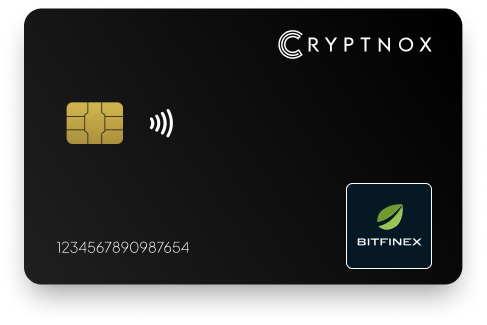
Yes. On Bitfinex, the Cryptnox card is registered from Account Security as Fido U2F and used as a second factor for the Bitfinex account and selected trade or withdrawal permissions. Bitfinex documents the physical security-key feature as U2F 2FA. The Cryptnox Crypto Hardware Wallet – Dual-Card Set adds a two-card backup model, with private keys generated inside secure elements and kept there.

CRYPTNOX products are also available worldwide through our official Amazon stores.

Faster FIDO2 sign-in on Windows: Click-to-Tap
When a service asks you to “tap your security key”, press the Click-to-Tap virtual button on the reader instead of pulling the card out and reinserting it. The card stays in the slot and the sign-in finishes in seconds.
The virtual button works on Windows with Cryptnox FIDO2 cards. On macOS and Linux the same reader operates as a standard PC/SC contact reader for any ISO 7816 card.
As fraudsters become more sophisticated, securing your Bitfinex account has never been more critical.
Enhance your protection with our FIDO2 Security Key, offering an extra layer of defense against phishing, identity theft, and unauthorized access. Safeguard your account with our cutting-edge solutions and experience more secure authentication.
Bitfinex supports physical security keys through FIDO U2F. For a Cryptnox buyer, that means the card is used as a possession factor after the normal Bitfinex sign-in step. The Bitfinex setup path is in the Two-Factor Authentication area, so the buying decision should be based on U2F 2FA support rather than on a different sign-in model used by other services.
Bitfinex also states that passkeys can be added as a second-factor option under FIDO U2F. Its help flow for physical security keys still describes the feature as Universal 2nd Factor, and the Bitfinex control panel places it under Fido U2F. That matters because the Cryptnox card should be evaluated against the Bitfinex U2F registration path, the devices used to reach Bitfinex, and the account actions you choose to protect.
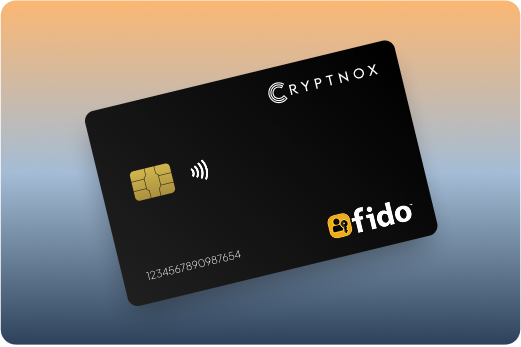
If you are comparing Bitfinex with other services that accept Cryptnox cards, start with the Cryptnox FIDO2 security-key card hub. Bitfinex fits the exchange 2FA use case, while the Fastmail security-key page shows how the same card family is considered for email account protection.
Bitfinex places U2F setup inside Account Security. Open the Two-Factor Authentication drop-down, choose Setup below Fido U2F, and then start device registration. During the flow, Bitfinex asks which permissions should use the U2F factor, including trade and withdrawal protection.
The same-browser email confirmation is part of the Bitfinex setup. Begin registration in the browser used to connect to Bitfinex, and confirm the setup email link in that same browser. Bitfinex documents this requirement in its help article on setting up U2F 2FA on Bitfinex.
If this is your first Cryptnox setup, prepare the card with the Cryptnox FIDO2 card startup guide before changing Bitfinex account-security settings. That keeps card preparation separate from the Bitfinex permission choices.
For Bitfinex U2F, the important security question is where the key material is held. Cryptnox private keys are generated inside the secure element and never leave it. When the card responds to a Bitfinex U2F challenge, the possession factor is tied to the smart card rather than to a copyable app-only secret.
Each Cryptnox card uses an EAL6+-certified chip. That certification applies to the chip platform, not to Bitfinex, the exchange account, or the finished card as a whole. For a Bitfinex buyer, the relevant point is that the U2F role is performed by a hardware secure-element card.
The Cryptnox Crypto Hardware Wallet – Dual-Card Set ships uninitialised. During initialization, the wallet seed is generated inside both cards’ secure elements, so the second card is the backup. The normal setup does not require writing down a seed phrase. Importing a 12/24-word BIP39 seed is an advanced option, not the default setup path.
Bitfinex separately supports additional U2F keys and custom labels. If you want both Cryptnox cards registered in Bitfinex, plan the labels before enrollment so the daily-use card and the separately stored card remain easy to identify in Account Security.
The product for this Bitfinex guidance is the Cryptnox Crypto Hardware Wallet – Dual-Card Set. It is the relevant purchase when you want Bitfinex U2F 2FA together with the Cryptnox two-card wallet backup model.
Cryptnox is a contact and NFC smart card. For Bitfinex use, you can tap the card to a phone or insert it into a reader when the U2F step asks for the security key. The card is dual-interface, which matters if you check Bitfinex on a phone but also use desktop trading sessions.
No current Bitfinex-imposed browser or mobile limits are documented in the Bitfinex U2F setup material used for this buying decision. The platform limits to plan around are on the Cryptnox side. Android use is CTAP1/U2F only, Linux needs the Cryptnox app, and the tap-button feature is available on Windows only.
If a Cryptnox app step is involved on a phone, the local unlock check uses the phone’s face or fingerprint capability. The card itself has no fingerprint or face sensor.
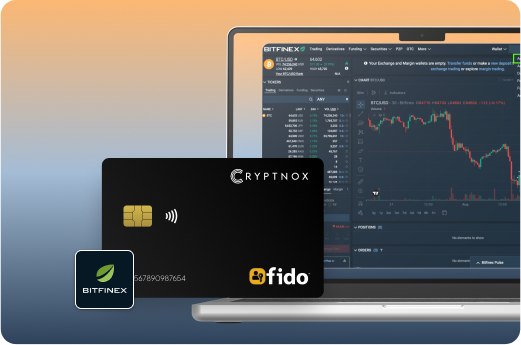
Bitfinex uses the Cryptnox card for account 2FA. The same Dual-Card Set is also a crypto hardware wallet used with the free Cryptnox app on iOS and Android. The wallet side can connect to Web3 through WalletConnect and works with MetaMask.
Keep the Bitfinex and wallet roles separate when planning access. A Bitfinex U2F registration approves a Bitfinex account-security challenge and any trade or withdrawal permissions selected during setup. WalletConnect and MetaMask belong to the wallet-signing side of the product. Both roles involve the same Cryptnox card set, but a Bitfinex U2F prompt is not the same action as connecting a wallet to a Web3 application.
If Bitfinex is one account in a wider security plan, use the parent guide to Cryptnox FIDO2 security-key cards to compare how different services place security keys in their access flows. Bitfinex should be treated as an exchange U2F 2FA setup.
Exchange buyers often protect more than one trading account, so review the separate Cryptnox security-key page for Binance before assuming the Bitfinex steps apply there. If your card plan also covers business infrastructure, the Cloudflare security-key page gives a non-exchange account-protection context.
A fair Bitfinex comparison starts with the service flow. Bitfinex documents physical security keys under FIDO U2F 2FA, so every card or key considered for Bitfinex must be judged against that second-factor registration path. A product built for a different access model does not change how Bitfinex places the feature in Account Security.
Cryptnox is most relevant when you want a card-shaped hardware wallet set that can also serve Bitfinex U2F. If the only goal is to add a possession factor to Bitfinex, the comparison should focus on whether the candidate key fits your Bitfinex devices, the same-browser setup requirement, and your trade or withdrawal permissions. If you also want the Cryptnox wallet workflow, compare the dual-card initialization, contact and NFC form factor, and app-based wallet use.
For financial-account comparisons outside crypto exchanges, the Bank of America security-key page shows another service-specific route to check before reusing assumptions from Bitfinex.
Bitfinex includes trade and withdrawal choices in the U2F setup path, so treat enrollment as a permissions decision. If you protect withdrawals, the Cryptnox card becomes part of the Bitfinex withdrawal path. Complete setup only when you can finish the browser session and the same-browser email confirmation without interruption.
After enrollment, test a normal Bitfinex sign-in while you still have access to Account Security. That confirms the card, browser, reader or phone, and any required Cryptnox app step before you depend on the card for exchange activity.
Store the second Cryptnox card away from the card used for routine access. The second card exists because the Dual-Card Set is initialized inside both secure elements, and Bitfinex labels help keep daily-use and separately stored cards clear when more than one U2F key is registered.
Yes. Bitfinex places physical security keys under Fido U2F in the Two-Factor Authentication area. The Cryptnox card can be registered for that second-factor role and for the trade or withdrawal permissions chosen during setup.
Open Bitfinex Account Security settings, use the Two-Factor Authentication drop-down, and choose Setup below Fido U2F. Bitfinex then starts device registration and asks which permissions should use the U2F factor. The setup email link must be confirmed in the same browser used for the Bitfinex session.
Bitfinex documents support for additional U2F keys and custom labels, but it does not document a numeric maximum. If you want more than one Cryptnox card available in Bitfinex, enroll each accepted U2F key through Account Security and label the cards clearly.
Yes. Cryptnox ships worldwide from the official CRYPTNOX store. Orders to Switzerland, the European Union and the United States are dispatched from stock already held in each of those regions, so the parcel does not cross a customs border into your country and there are no import duties to pay. Orders to other destinations are shipped internationally, and any import duties or local taxes are set by the destination country and are the recipient’s responsibility. Current shipping rates are shown at checkout.
No. The smart card used for the Bitfinex U2F challenge has no on-card fingerprint or face sensor. When the Cryptnox app is involved on a phone, the local unlock check is handled by the phone. The card's security role is secure-element custody and U2F response.
The Dual-Card Set is delivered uninitialised. During setup, the wallet seed is created inside both secure elements, making the second card the backup. The normal route does not require writing down a seed phrase; importing a 12/24-word BIP39 seed is an advanced option.
Plan around the Cryptnox platform notes. Android use is CTAP1/U2F only, which matches Bitfinex's documented physical-key role. Linux needs the Cryptnox app. For phone use, the card can be tapped through NFC; for contact use, insert it into a reader.
For Bitfinex, the card's role is U2F 2FA. The Dual-Card Set adds a wallet-focused backup model, contact and NFC smart-card use, and secure-element key custody. It is most relevant when you want Bitfinex account protection and the Cryptnox hardware-wallet workflow in the same two-card purchase.