
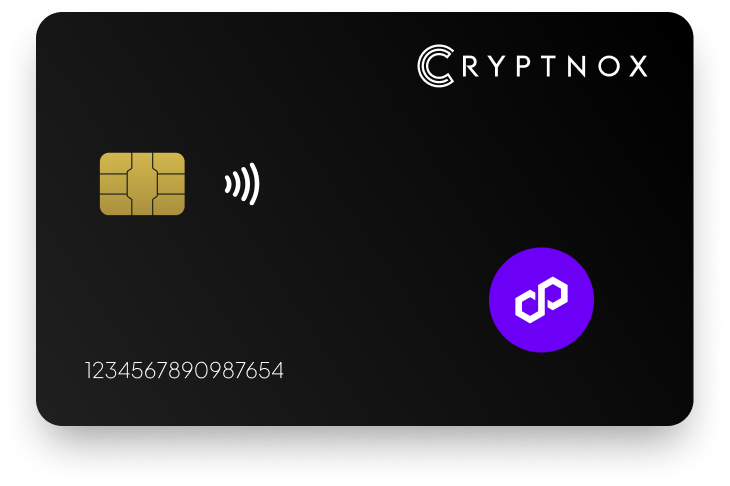
Secure Your Digital Assets with Confidence
Experience next-level protection for your digital assets with a premium hardware wallet built for security-first users
Designed around advanced encryption and a dedicated secure chip, it delivers robust offline storage while supporting a wide range of digital assets and ecosystems
The streamlined setup lets you get started in minutes, giving you access to true cold storage, reliable backup options, and full control over your assets
Engineered for performance and peace of mind, this hardware wallet is a trusted solution for anyone seeking long-term security beyond online threats
Buy it from CRYPTNOX shop directly
Accepts:

Preferred shopping solution for US:

Also available on other Amazon shops:
DE, FR, IT, BE, SE, ES, PL, NL, CA, MX, AU
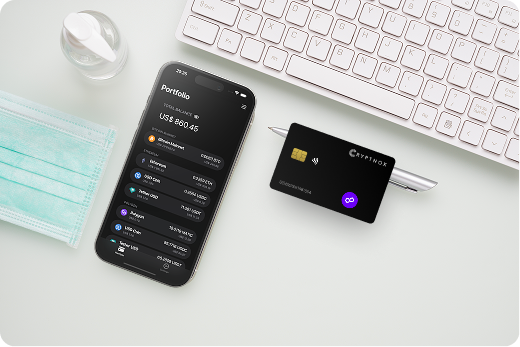
Keeps sensitive access data fully offline, protecting against online threats
Delivers a higher level of security compared to software-based solutions
Enables quick, secure actions while maintaining maximum protection
Introducing Cryptnox, the revolutionary hardware wallet designed to keep your digital assets safe, accessible, and fully under your control. Built on advanced smartcard technology, our wallets feature a secure dual-card backup system, biometric authentication, and seamless integration with MetaMask, WalletConnect, and Web3 apps. Whether you’re storing cryptocurrencies, swapping tokens, or diving into DeFi, Cryptnox delivers bank-level security without the complexity, empowering you to manage your portfolio with peace of mind.
Product Features
Product Specifications:
What It’s Built For:
Cryptnox hardware wallets are your go-to solution for:
Why Cryptnox Stands Out:
This isn’t just a wallet it’s a fortress for your digital future. With no access to your keys by Cryptnox (we never store or see them), audited firmware for top-tier reliability, and global availability, our hardware empowers beginners and experts alike. Backed by comprehensive tutorials, blogs, technical resources, and 24/7 support, Cryptnox ensures you stay ahead in the crypto world with unmatched security, simplicity, and innovation.
Cryptnox Hardware Wallets – Your Gateway to Secure, User-Friendly Crypto Management.
Ready to secure your assets? Buy a Cryptnox Hardware Wallet now and protect your crypto with ease.
Hardware Wallet | Description |
Ledger Nano X | Bluetooth-enabled premium hardware wallet with CC EAL5+ secure chip. Excellent Polygon support via Ledger Live for native staking and swaps, plus MetaMask for dApps. Supports 5,500+ assets with mobile-first design. Top pick for long-term secure storage. |
Ledger Flex | Compact E-Ink touchscreen wallet with CC EAL6+ chip. Lightweight and user-friendly for daily Polygon use with long battery life. Clear Signing for safe transaction verification. Strong DeFi and NFT support. |
Ledger Stax | Premium curved E-Ink touchscreen model with wireless charging and stylish design. Top-tier EAL6+ security with full Polygon management in Ledger Live. Customizable interface ideal for high-end experience. |
Trezor Safe 5 | Advanced open-source hardware wallet with color touchscreen, EAL6+ chip, and haptic feedback. Excellent Polygon PoS support via Trezor Suite and MetaMask. SLIP39 backups provide strong alternative to Ledger for transparency and security. |
Trezor Safe 3 | Affordable open-source option with solid EAL6+ security. Reliable Polygon support through integrations with simple button interface. Great value for beginners seeking verifiable firmware. |
OneKey Pro | Touchscreen hardware wallet with EAL6+ chip and open-source elements. Full native Polygon support across 100+ chains. SignGuard anti-phishing technology with Bluetooth and USB-C connectivity. Multisig and hidden wallet features praised for multi-chain DeFi. |
Tangem Wallet | Card-based NFC hardware wallet with no battery or screen. Highly durable with EAL6+ chip and 25-year warranty. Easy Polygon support via app with seedless backups through multi-card redundancy. Excellent for simplicity and portability. |
SafePal S1 | Affordable air-gapped wallet using QR codes with self-destruct mechanism. Supports 200+ chains including Polygon zkEVM. Open-source app great for cold storage on a budget with strong anti-tampering features. |
ELLIPAL Titan | Fully air-gapped metal device with large touchscreen using QR code signing only. Robust EVM and Polygon support. High security for offline signing suitable for users prioritizing isolation from networks. |
Keystone 3 Pro | Air-gapped QR-code wallet with fingerprint sensor and large color screen. Open-source firmware supports Polygon via MetaMask. Excellent for detailed transaction review and DeFi users. |
BitBox02 | Compact Swiss-made wallet (Multi edition) with dual-chip design and open-source firmware. Solid EVM support including Polygon via companion app and MetaMask. MicroSD backup focuses on verifiable self-custody. |
KeepKey | Simple large-screen hardware wallet supporting Polygon through integrations like ShapeShift or MetaMask. Clear transaction display. Affordable and reliable for basic cold storage. |
NGRAVE ZERO | Premium fully air-gapped aluminum device using QR codes with no USB or Bluetooth. Direct Polygon POL support plus EVM via MetaMask. Military-grade security with touch screen and high build quality for maximum protection. |
D’CENT Biometric | Fingerprint-authenticated hardware wallet with mobile app. Convenient for Polygon transactions supporting EVM chains. Good balance of security and everyday usability. |
Initial hardware wallet setup begins with device initialization and secure seed phrase generation. Most hardware wallets guide users through PIN creation and recovery phrase backup during first use. Write recovery phrases on durable materials and store in secure locations separate from hardware devices. This separation ensures wallet recovery remains possible even if hardware devices are lost or damaged during development activities.
Install MetaMask browser extension or mobile app after completing hardware wallet initialization. Configure MetaMask with Mumbai testnet network parameters by adding a custom RPC entry. Mumbai’s chain ID 80001 distinguishes testnet from Polygon mainnet, preventing accidental transaction broadcasts to wrong networks. Save the Mumbai network configuration and switch MetaMask to testnet mode before connecting cold wallet devices.
Connect your hardware wallet through MetaMask’s account menu by selecting “Connect Hardware Wallet” and choosing your device type. MetaMask detects connected hardware devices and requests permission to communicate. Approve the connection request on the hardware wallet screen, then select which account addresses to import into MetaMask. Hardware-connected accounts display distinctive icons indicating external signing requirements for all transactions.
DeFi protocol interactions on Mumbai require approval transactions before executing swaps, deposits, or withdrawals. Hardware wallets make token approval amounts explicit through confirmation screens showing exact permission levels. Developers testing DeFi applications can validate how approval workflows appear to end users, ensuring frontend interfaces properly communicate permission requests. Limited approval amounts reduce risk exposure during testing phases where smart contract bugs might exist.
Liquidity pool operations involve multi-step processes where hardware signing confirms each transaction component. Adding liquidity requires token approvals followed by deposit transactions, with hardware wallets prompting confirmations at each step. Testing these workflows on Mumbai reveals friction points in user experiences where multiple hardware confirmations might cause abandonment. Developers optimize transaction batching and approval flows based on Mumbai testing insights before mainnet deployment.
Yield farming strategies often involve complex contract interactions spanning multiple protocols. Hardware wallet transaction verification displays show each protocol interaction, allowing developers to validate complete operation flows. Mumbai testing with hardware signing identifies where transaction sequences might fail or where gas estimation errors could strand operations mid-process. This visibility prevents mainnet scenarios where partial operation completion leaves user funds in unexpected states.
Separate hardware wallet accounts for testnet and mainnet operations prevent accidental transaction broadcasts to wrong networks. Many hardware wallets support multiple account derivation from single seed phrases, enabling dedicated Mumbai testnet accounts. Label accounts clearly within MetaMask to distinguish testnet from production addresses. This separation reduces risks where developers might inadvertently spend mainnet assets during testing activities.
Verify network configurations before signing transactions, confirming MetaMask displays “Mumbai Testnet” rather than “Polygon Mainnet.” Hardware wallet screens typically show chain IDs that can be cross-referenced against known network identifiers. Double-checking network context before approval prevents costly errors where testnet transaction logic executes against mainnet contracts and protects against crypto drainer attacks.
Limit testnet account funding to necessary amounts for immediate testing purposes. While Mumbai uses valueless test MATIC, associated ERC-20 tokens might represent significant development effort or intellectual property. Restricting testnet holdings minimizes losses if accounts become compromised during security testing activities. Treat testnet security seriously even though monetary value remains absent, as development workflows and deployment practices carry forward to mainnet.
Network configuration errors represent the most frequent connection issue, typically involving incorrect RPC URLs or chain IDs. Hardware wallets connect successfully to MetaMask but transactions fail when Mumbai network parameters contain typos. Verify RPC endpoints use current Mumbai infrastructure URLs, as testnet providers occasionally change addresses. Chain ID 80001 must match exactly, as single-digit errors route transactions to entirely different networks.
Hardware wallet firmware compatibility sometimes prevents proper Mumbai transaction signing. Older firmware versions may not recognize Polygon’s gas token transitions or Layer 2 specific transaction formats. Update hardware wallet firmware to latest versions before beginning Mumbai development. Manufacturers regularly release updates supporting new blockchain networks and transaction types as ecosystems evolve.
Transaction confirmation delays on Mumbai testnet can create confusion about whether hardware signing completed successfully. Testnet block times vary based on network load, sometimes taking longer than mainnet confirmations. Hardware wallets complete signing almost instantly, but blockchain confirmation requires mining. Wait patiently after hardware approval while MetaMask shows pending transaction status. Block explorers provide confirmation when transactions finalize on Mumbai’s testnet.
Secure your Mumbai testnet workflow with the Cryptnox hardware wallet designed for blockchain developers.
The Cryptnox solution is a high-security hardware wallet based on the latest smartcard technology available A seed is either generated or injected as part of the initialization process, which makes it compatible with the BIP32 and BIP39 standards When choosing the Dual Card Setup option, you can generate an identical seed in two cards in only seconds, and store the backup card in a safe place for recovery
A hardware wallet is a physical device designed to securely store private keys offline Keeping sensitive data disconnected from the internet, it significantly reduces exposure to hacking, malware, and phishing attacks
Unlike software wallets that operate on internet-connected devices, hardware wallets isolate private keys in a secure environment Transactions are signed internally, ensuring keys never leave the device or are exposed online
Yes! Hardware wallets are ideal for long-term asset protection Offline storage, durable hardware, and secure backup mechanisms make them well-suited for holding assets safely over extended periods
Access can be restored using a secure recovery process, typically based on a recovery phrase or backup solution created during setup This ensures assets remain accessible even if the physical device is no longer available
Modern hardware wallets are designed with user-friendly interfaces and guided setup processes
This makes them accessible to beginners while still meeting the security standards required by advanced users